

We may receive a commission from our partners if you click on a link to review or purchase a product or service. Click to Learn More
Customer retention is one of the most effective ways to achieve business success, but turning customers into repeat buyers isn’t always straightforward, especially if you don’t leverage tried-and-tested strategies.
Customers are the lifeblood of any company, and companies around the world are trying even harder to figure out how to keep up in these difficult times. A robust CRM software solution can be instrumental in supporting these efforts, helping to track interactions, personalize communications, and implement effective retention strategies.
We’ve done a deep dive into the most effective customer retention strategies to grow your business during the recession and beyond.
Why is Customer Retention So Important?
Customer retention remains one of the most important strategies to consider for businesses of all sizes. Data has shown time and time again that the path to success is littered with loyal customers that are not only willing to make repeat purchases, but also go to bat for their favorite brands with friends and on social media. Retaining existing customers costs five to 25 times less than acquiring new customers too, making encouraging repeat buying a no-brainer.
Here are the most important strategies you can employ to help retain these loyal customers.
- Invest in Customer Service
- Encourage Customer Feedback
- Utilize Automation
- Segment Your Audience
- Appreciate Your Customers
- Embrace Personalization
- Newsletters, Newsletters, Newsletters
- Build Community
- Be Socially Conscious
- Make Your Business Accessible

Increase Customer Retention with CRM Software
Use Tech.co's free comparison tool to find the best Customer Relationship Management software for your business.
1. Invest in Customer Service
Although this may seem the most obvious way to retain customers, it couldn’t be missed off our list. Simply put, keeping customers happy is the best way to keep them coming back for more, and providing high quality customer service is the best way to do that. You can make a big difference in your retention strategy by making customer service more of a priority. But how?

How it works
Improving customer service comes in many shapes and forms, but actually spending a little more on it is the best place to start. Hiring more representatives, investing in one of the best CRM software solutions, or even experimenting with chatbots can have a surprisingly large effect on customer experience. Granted, it can be difficult to point to a directly measurable ROI, but data shows time and time again that those investments do pay off in the long run.
Example
The financial investment doesn’t need to be mammoth. One example of a way you could invest more in customer service and increase customer retention, without undue expense, is by introducing customer support Key Performance Indicators (KPIs). This will allow you to measure things like complaints filed, problems resolved, and biggest problem areas.
With KPIs, you can more specifically and comprehensively measure how your customer service reps are handling problems, and where your biggest problem areas are. Plus, instead of just noticing the negative reviews, you’ll be able to track positive customer support experiences as well. This will give you a chance to reward those who are benefiting your business most, identify mentors to train and improve other customer support reps, and help you form a more complete and actionable plan for improving customer support down the line.
To get started with KPIs, check out our Salesforce pricing guide
Why it’s important
According to our own research, 94% of businesses are looking to make a purchase from the same source, which means customer retention is essentially yours to lose. And given customer service is poised to supplant price and product as the number one differentiator among brands, improving it is arguably the most important customer retention strategy you can implement.
Additionally, one study found that 54% of customers believe that customer service is an afterthought for most businesses, which means you can really set yourself apart by investing in your team.
2. Encourage Customer Feedback
While positive customer reviews feel great (especially when you’ve recently invested in your customer service team), negative ones hurt pretty bad, which is enough for some managers to forego them altogether. However, as hard as it is to endure a customer complaint, the value for your company is undeniable as far as customer retention is concerned.

How it works
You can’t simply rely on Google reviews and social media posts to get an idea of how your customers feel about your business. You need to be actively encouraging verified users to talk about their experience when it’s fresh in their minds, and there are a few different strategies you can go about utilizing to do so. While “customer feedback” might sound like an tiring metric to collect and handle, there are more simple avenues for measuring customer satisfaction than you might realize.
Example
One of the easiest ways to encourage customer feedback is to schedule automated emails encouraging reviews after purchases. This will help you tap into your most valuable target audience those who have recently made purchases giving you helpful, actionable information about how your business is running. The process is easy to set up too, with most email marketing apps like Mailchimp and EmbedSocial offering the service as part of their core offering.
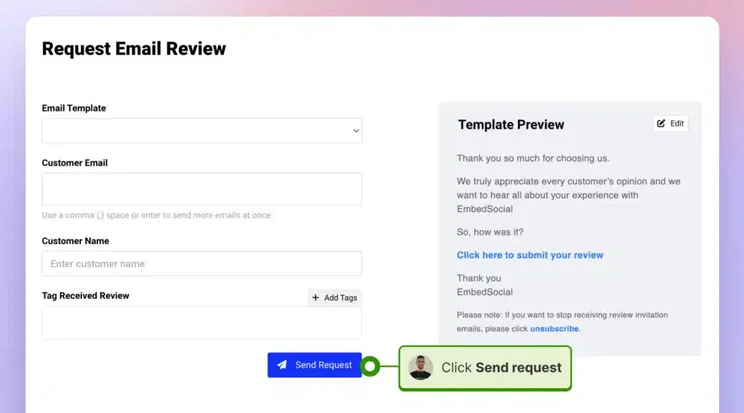
Platforms like EmbedSocial make it easy for businesses to request feedback from customers. Source: EmbedSocial
Why it’s important
Customer feedback is basically free field research, which is inherently valuable to your business. Rather than paying extra for analytic reporting tools or think tanks, your customers are willing and able to send you real-time, user-verified data on what works and what doesn’t. And with 83% of customers feeling more loyal to brands that acknowledge and resolve their complaints, it seems like a bit of a no-brainer.
Plus, people want to see your reviews! Tech.co research showed that 38% of consumers believe reviews to be the most helpful resource when making a purchasing decision. Additionally, we found that “consulting peers” was consistently considered the most trusted means of sourcing information, so you know a user review will influence a potential loyal customer. With 81% of customers claiming that trust is an important factor when making buying decisions, this trick is too important to miss if you’re serious about boosting customer retention.
3. Utilize Automation
It’s 2023, and the business world has been abuzz with talk of automation for a while now. Innovations powered by artificial intelligence are streamlining the business world, handling all the menial tasks disliked by human workers. So how can you take advantage of this technology to retain customers?

How it works
Automation is built into a lot of business software nowadays. From Customer Relationship Management (CRM) software to basic accounting programs, computers can easily keep track of even the most complex metrics, like hours worked and jobs completed, without taking up your precious time. AI has even become advanced enough to perform tasks for you, like following up with clients and asking for reviews. This means your team is freed up to manage the more complex tasks, like managing serious customer complaints in real-time.
Example
The best use of automation when it comes to customer retention is chatbots. These handy tools can be implemented into your social channels, your website’s customer service portal, or pretty much anywhere that online messaging takes place. A good chatbot will be able to field up to 80% of your customer support requests, opening your team up to manage the more challenging issues with speed and poise.
Creating a custom customer service chatbot has become easier than ever with OpenAI’s GPT store. Building one isn’t as complex as you might expect. Learn how to make a GPT in simple steps here.
Why it’s important
The business world has become far too vast for it to be run exclusively by humans at this point, so automation and artificial intelligence are carrying a hefty portion of the load. Taking advantage of this, whether through automated business software or AI-powered chatbots, is the key to keeping up in today’s crowded market.
We know it’s not easy though. In fact, we found in a Tech.co survey of 1000+ B2B decision-makers that 22% of business owners believe embracing new technology is the biggest challenge facing their company. However, our study also showed that 23% of businesses insist paperwork and communications are their most time-consuming tasks, so it’s undeniably a worthwhile investment. Further research backs this up — 54% of executives say AI solutions implemented in their business have already increased their productivity!
Plus, with 85% of customer experiences soon set to be handled without human intervention, and 40% of customers insisting they don’t care whether or not a human helps them, it’s safe to say the trend is here to stay. (Source)
4. Segment Your Audience
Audience segmentation is a marketing strategy focused on identifying sub-groups within your larger target audience. Aside from making it easier to attract leads in the first place, segmenting your audience and identifying which customers have been loyal to your brand makes it easier to encourage more of this behavior in the future.

How it works
Customer segmentation works by dividing your customer base based on common characteristics. These characteristics can be based on buying history, like whether someone is a one-time or repeat buyer, or on demographics like age, gender, or location. Businesses can then use these insights to create more targeted marketing strategies, and to establish better relationships with customers.
Example
When segmenting customers, businesses can create segments for repeat buyers, and can even break it down into customers who fell off for no unknown reasons, and those who logged a complaint with the company. Businesses can also create distinct categories for previous repeat customers that have been dormant for a long time. They can then use this data to create personalized marketing strategies for these specific groups.
Why it’s important
The hard truth is that it’s impossible to keep customers happy at all times. However, by grouping your customers into distinct categories, and targeting those who are more likely to buy from you in the future, you have more chance of improving your customer retention in the long term. This also prevents you from wasting time and resources on customers who are clearly just one-time buyers.
5. Appreciate Your Customers
It’s no secret that people like feeling appreciated, and paying customers are no exception. The key, however, is making sure that they know you appreciate them and it takes a concerted effort to guarantee that’s the case.

How it works
If you really want to show your customers that you appreciate them, you need to be active in this role. You have to show your customers that you value their loyalty through rewards, sales, and even just listening to their complaints in a meaningful way. Say thank you when they purchase your products, and say sorry when you mess something up. In so many words, treat them how you’d like to be treated as a customer yourself.
Example
One great way to show loyal customers that you appreciate them is with a referral program that confers rewards and bonuses to customers who spread the word about your business. By offering customers something like $50 towards your online store when they refer a friend with a special code, it gives them incentive to help you attract new customers, and shows them that you’re willing to provide them with rewards for their brand loyalty.
Why it’s important
Customer appreciation might seem like an unnecessary step towards retention, but it’s really not. In fact, 68% of customers decide to leave a business due to perceived indifference towards them, which is enough of a reason to get your appreciation hat on right now. The emotions of customers are just as important as their purchasing power, so make sure to consider their feelings.
6. Embrace Personalization
Everyone likes to feel special, and strangely enough, that can come from something as simple as remembering their name. From a customer retention standpoint, this means that personalization, in one form or another, can be an invaluable tool in your arsenal when it comes to breeding loyalty. However, when you’re implementing a professional personalization strategy aimed at retaining customers across your business, you’re going to have to do a little bit more than remembering their name.

How it works
Entirely personalized experiences can be created in a number of ways. Digital cookies on your online store can help to remember a user’s past interests, and allow customers to more effectively navigate your site while also encouraging them to make a purchase. Businesses that aren’t ecommerce based can use personalization on their websites through a user portal for returning customers to log in and get a tailored recommendations and discounts, or through mail promotions that appeal to a customer’s specific demographic and potential concerns.
Example
The most obvious example of a commonly-found personalization strategy would be the “recommended for you” section found on many online retailer websites. These are typically based on previous purchases and search history, so there will be an element of data mining that will need to be addressed and handled properly, but it’ll be worth it when it comes to personalization’s effect on the everyday buyer, the data is all but certain.
Why it’s important
60% of consumers note that they are more likely to become a repeat customer after a personalized shopping experience. However, be wary of overmining customer data, as 69% of customers appreciate personalization only when it’s based on information that has been shared willingly with the business.
7. Newsletters, Newsletters, Newsletters
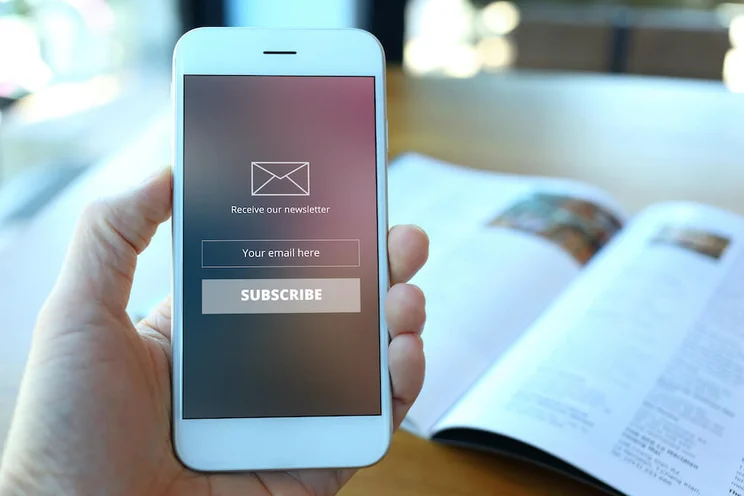
Newsletters are an unimaginably impactful tool for customer retention that you need to implement at your company, no questions asked. It may seem basic, and it may seem trivial, but trust us on this one or you’ll be leaving potentially loyal customers in the dust.
How it works
It couldn’t be simpler to set up a newsletter with tools like MailChimp or HubSpot. To find those interested in your company newsletter, you could ask for email addresses at the checkout, pop a newsletter sign up box on your website, or ask customers who follow you on social media to sign up. Cultivating an email list and utilizing it to share valuable information with your customers could make a huge difference in whether customers decide to return to your business or not.
Example
Let’s say a customer makes a purchase in your online store. They sign up for an account with their email address and check the little button at the bottom that says they’re in favor of receiving updates via your newsletter. This means they are prepped to be a loyal customer (after all, who in the world checks that box?), and you should take advantage. A few days later, you reward them with an email that gives them 20% off their next purchase at your store. It’s a setup for a win-win — they get money off, you gain a loyal customer. A pretty great strategy, right?
Why it’s important
Email marketing remains one of the most popular and effective means of reaching and retaining customers in the business world. In fact, 64% of marketers noted that they achieved or exceeded business goals through newsletters.
Just remember not to overload users with information via newsletters. With nearly 300 billion emails sent every day around the world, the last thing you want to do is contribute to newsletter fatigue, so make sure you only send out important information that your customers will truly value.
8. Build Community
Loyalty doesn’t just materialize out of mid-air. If you want customers to truly be steadfast in their support for your company, you’re going to need to make an effort to build an environment that fosters loyalty all the time, not just when you reach out. In other words, you need to build a community that people can feel part of.

How it works
Unlike sending newsletters, building a community is a bit more abstract, which means you’re going to have to evaluate the best way to do so for your particular business. From an online store perspective, one of the best ways to do this is by setting up a dedicated loyalty program that rewards return customers with exclusive sales, deals, and other perks, just for those that engage regularly. But that’s not the only way.
Example
Commonly found on business software websites, online forums are a stellar means of building a community around your product, all while improving your overall customer service offerings. They allow users to communicate with each other while also being guided by experts familiar with your products, which fosters a general sense of community in participants.
Why it’s important
Community building isn’t just about providing easy customer service options and easier loyalty program purchases down the road. It’s about adding genuine value and connection to customers’ lives, providing a strong incentive for them to stay loyal. The return on investment from building a community around your business can be substantial indeed, one study found that customers spent 19% more at a company when they felt they belonged to that company’s online community in one form or another.
9. Be Socially Conscious
Whether we’re in a global crisis or not, customers value socially conscious companies. It doesn’t matter if you’re a massive multinational corporation, or a small-time startup with a local following being socially conscious is just as valuable to your business as it is morally important.

How it works
Being socially conscious obviously doesn’t come easy when you’re a business that needs to look out for its bottom line. However, the reality is that the modern day consumer is as vigilant as ever, and if you hope to retain them, you’re going to need to be willing to give back, be inclusive, and put the good of humankind ahead of your shareholder returns. Customers will notice.
Example
One prime example of how businesses make sure they are socially conscious is through partnerships with like-minded charities. Teaming up with an admirable organization or non-profit will immediately help you to implement socially conscious initiatives in your company, as well as improve your overall reputation within the community.
Why it’s important
You shouldn’t just be acting socially conscious for the sake of your customer retention strategies, but that doesn’t mean you should do so blindly. According to one study, 87% of consumers reported willingness to make a purchase based purely on a company’s stance on social matters. Meanwhile, 76% said they would decline to do business with a company if it held views and supported issues that conflicted with their beliefs. So if you’re having trouble convincing anyone at your company that charitable actions don’t matter, we’ve got you covered.
10. Make Your Business Accessible
When it comes to attracting loyal customers, simplicity is key. You may have the best product or service in the world, but if customers don’t understand your vision in clear terms, they’re less likely to come back to you down the line.

How it works
With customers being faced with so many buying decisions every day, having a unique selling point (USP) that cuts through the noise is essential for growing your business.
To make your business and its service or products easy to understand, we’d recommend using simple language at all times – especially when presenting information about your product or service – having detailed ‘about us’ pages on your website, creating explainer videos if your offering is more complex, and utilizing resources like frequently asked questions (FAQs) to clear up any uncertainties that may remain.
Example
Having a crystal clear about us page is a great way to make your business accessible to customers. Tinned fish company Fishwife does a great job of summarising its company goals, its main product, and where they source their ingredients in its about us page. What’s more, by positioning this information alongside a clear picture of their primary product, there’s no room for ambiguity – customers know exactly what they’re getting if they buy from this brand.

Why it’s important
If your buying proposition is too complex, you’ll lose customers at the first hurdle, and fewer buyers will consider making repeat purchases. Customers will be less likely to recommend your offering to their networks too, and with word-of-mouth marketing being one of the most effective ways to increase your brand’s exposure, this could create a huge loss for your business.
Benefits of Customer Retention Strategies
As you’re on this page, you probably already know that customer retention strategies are worthwhile. But just how worthwhile is it to spend all that that time, effort, and resource on getting it right? Well, we’ll tell you.
Customer retention is cheaper than acquisition
Often-cited data from Invesp shows it costs five times as much to reach new customers as it does to retain your existing ones. Is it worth the high expense for the addition of these new customers? Perhaps but not if you’re losing the loyalty and business of the customers you already have. As they say, “a bird in the hand is worth two in the bush” and the figures back this up.
Loyal customers spend more
Generally speaking, attracting new customers is decidedly less fruitful than retaining customers and encouraging their loyalty. In fact, 43% of customers spend more at businesses they are loyal to, making it worth the investment to focus on retaining customers.
Loyal customers are easy to sell to
To make it even more obvious, businesses have a 60% to 70% chance of selling to an existing customer, while new prospects’ odds are a mere 5% to 20%. Plus, loyal customers are five times as likely to repurchase and seven times as likely to try a new product or service. So why on Earth wouldn’t you want to hang on to them?
Loyal customers breed new customers
Focusing on looking after your existing ones enables customer growth to happen naturally. Your increasing reputation will attract disgruntled customers from competitors, through reviews and word of mouth. Loyal customers are more likely to refer, and even better, new customers who have been referred bring in 25% more revenue than those who are not.
Loyal customers overlook mistakes
No company can get it right every time, and loyal customers are less likely to start a riot when a hiccup happens in fact, they’re almost six times as likely to forgive mishaps.
Losing customers costs money
Just how much money is lost due to poor customer retention methods? One study noted that US companies lose $136.8 billion per year due to avoidable consumer switching. Leaving money on the table is rarely considered good business strategy.
Customer retention makes money
Let’s be honest, it’s all about return on investment when it comes to implementing new strategies and customer retention is solid as a rock. In fact, on average 80% of your revenue comes from 20% of your most loyal customers, so investing in customer retention will directly impact your bottom line.
How CRM Software Can Help
Working hard and working smart are two entirely different business strategies, and retaining customers is clearly an example of the latter. The ease with which you can make money and build your business through loyal customers is infinitely more effective than trying to win back new customers to replace the loyal customers you’ve lost.
The key is implementing and keeping track of all these strategies and that’s where CRM software can really help. It will guide you through developing your customer relationships, so you don’t have to do all that legwork.

Customer Retention Case Studies
There’s no better way to get a feel for customer retention than seeing it in the real world. That’s why we talked to a number of real business owners to learn more about what it takes to prioritize customer retention and how it can help you grow your business.
Anne Brettle – Founder of Stellar Global
“The recipe for customer retention is simple – retail has to become relentlessly customer-focused. We place a strong focus on building experiences for customers such as in-store product demonstrations to help people learn about a brand and increase their knowledge around a product. This face time with the consumer not only helps promote brand knowledge but it gives customers a reason to return to your store. In-store experiences encourage repeat visits and, eventually, transactions. The more a customer engages with your brand, the more likely they are to make purchases.
Our most recent survey of UK consumers found that 84% of people would feel more inclined to buy from a brand in the future after a product demonstration experience. I believe that brands who offer experiences, in stores or virtually, are considerably more likely to guarantee customer loyalty in the future, as shoppers are keen to explore their options, experience them at close quarters and arrive at a fully educated conclusion before purchasing a product – because choice is exactly what shoppers have in today’s retail market.”
Dennis Vu – CEO and Co-founder of Ringblaze
“One of the best customer retention strategies that we came up with is doing customer success interviews. For our best customers, we invite them for a short call (15-20 minutes) where we ask them what they love so much about our product and if there’s anything else we can do to make them even happier. This has been a superb way to retain our happiest customers and we got some amazing insights from them as well.
Another tip we have is in-app messaging. We have triggers for actions that our customers take in our app. For example, the first time they use it to make and receive a call, the first time a call results in a sale, etc. If we notice that they are not taking full advantage of our product, we send them in-app messages and tips on how to use our best features. This has helped us retain some customers which were highly likely to churn and stop using our product.”
Jamie Fisher – CCO of Supercard Worldwide
“Our customer service team is very important to us, with our team constantly being trained in order to help with all customer queries. We have an out of hours service to ensure that even if customers can’t speak to our concierge service, they can at least speak to a human, so they know their enquiry is important to us.
For our more tech-savvy customers we are launching video push notifications, so they can be updated with new offers easily, as well as being reminded to use our service. We also use a number of other strategies to work on retention, as it really is as important as acquisition.
We are constantly evolving our offer and we want our customers to have as much value out of Supercard as possible and the longer they are with us, they’re rewarded more and more.”
Frequently Asked Questions
Customer retention refers to the ability of businesses to keep customers loyal to their brand. Some customer retention strategies include investing in customer service and encouraging feedback.
The three R’s of customer retention are retention, related sales, and referrals.
There are a few strategies for manifesting loyal customers, like investing in customer service, automating processes, and embracing email marketing as a valuable tool.
If you click on, sign up to a service through, or make a purchase through the links on our site, or use our quotes tool to receive custom pricing for your business needs, we may earn a referral fee from the supplier(s) of the technology you’re interested in. This helps Tech.co to provide free information and reviews, and carries no additional cost to you. Most importantly, it doesn’t affect our editorial impartiality. Ratings and rankings on Tech.co cannot be bought. Our reviews are based on objective research analysis. Rare exceptions to this will be marked clearly as a ‘sponsored’ table column, or explained by a full advertising disclosure on the page, in place of this one. Click to return to top of page


