
We may receive a commission from our partners if you click on a link to review or purchase a product or service. Click to Learn More
Asset tracking is the process of monitoring, managing, and – as the name suggests – tracking the items, objects, and devices that your company owns. This includes everything from computers and other IT equipment to vehicles and even artwork.
Wanting better visibility over the location, status, and health of valuable company assets that you’ve invested in is completely understandable – especially if you can’t afford to replace your assets regularly. Luckily, there’s a huge range of top asset tracking companies that do exactly that!
In this guide, you’ll learn more about the different ways companies are tracking assets right now, how better asset monitoring can benefit your business, and what hardware and software options are currently available to help you.

What Is Asset Tracking?
Asset tracking (also known as asset monitoring) is the process of using asset tracking hardware and software to remotely manage both movable and fixed assets, from laptops to shipping containers, and ensure valuable items remain secure and in good condition.
Asset tracking allows businesses to log the location and status of items, using smart GPS, RFID, or barcode technologies, either manually or in real time, depending on the provider.
In addition to asset location, an asset tracking system might also track an asset’s name, type, usage, engine hours, maintenance schedule, or other information, and may send alerts to managers when anything goes amiss.
While the scope of asset tracking is large enough to apply to fixed assets such as warehouses and to smaller assets such as laptops or pagers, this guide pays closer attention to the most vulnerable class of assets: high-value, movable ones that must be monitored remotely. Popular assets in this group include construction and moving equipment, road and railway vehicles, and even porta-potties.
How Asset Tracking Works
Assets are typically tracked using one of the three methods listed below:
- Barcode labels/tags: This method involves attaching barcode labels or tags to assets that need to be tracked. The barcodes then must be scanned to update the system on each asset’s current location.
- GPS (Global Positioning System) tags: These tags automatically broadcast their location data via satellite, and are the most modern – and perhaps most reliable – way to track assets over long distances.
- RFID (Radio-Frequency Identification) tags: Small tags that include antennae and use radio waves to transmit data across short distances. They’re often used by vehicle tracking companies.
Another way to categorize these three methods is whether they are active or passive. Tags that emit their own signal independently are commonly referred to as active tags, while those that simply reflect a signal sent by another device or don’t emit a signal at all, like barcodes, are considered passive.
Barcode asset tracking
Barcode labels are a passive asset tracking method, since they need to be manually located and scanned before the system is updated to their current location. Companies tracking assets with barcodes will print labels with unique data on them and stick them to assets. The barcodes can subsequently be scanned at whichever location that asset ends up at.
For barcode asset tracking – as well as the other kinds – a central software system logs the information and maintains all high-value assets. It’s this software that can include features such as text or email notifications, and which displays a dashboard that allows managers to view all their assets at a glance.
As barcode asset tracking requires an internet connection for data to be uploaded, it’s popular with IT service teams that track office-based assets. They will use ITSM solutions like Freshservice to track their IT assets.

Scanning a barcode label on an asset. Image: Adobe
GPS asset tracking
GPS-operated trackers, meanwhile, are active, since they broadcast their locations at all times. This means that, of these three methods, GPS tracking is the only one that tracks assets in real time. The biggest names in asset tracking – Verizon Connect and Samsara – offer GPS tracking.
GPS tracking tends to be more expensive, since it requires more technology and offers more features. It’s also the only good option for powered assets — assets that require a power source like electricity or fuel.
Many GPS trackers offer high-value asset monitoring features like the ones mentioned in our previous section. These might include the ability to record powered assets’ engine use, authorized and unauthorized use, and maintenance schedules, as well as tracking travel time and historical data.
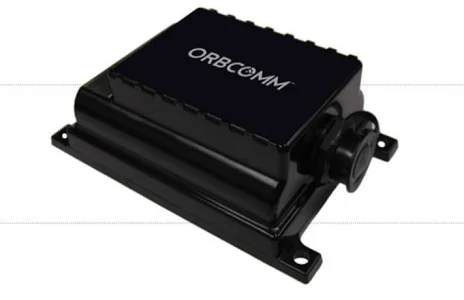
An example of GPS tracking hardware device. Image source: Orbcomm
RFID asset tracking
RFID tags are small devices that can receive and either send or reflect radio signals to RFID readers, which tend to in secure, stationary locations.
RFID tags can be both passive and active. They are considered “passive” if they will only transmit data a few yards and must reach a checkpoint to be logged by the system. They are considered “active”, on the other hand, when they use a battery to boost their signal to around 1.25 miles, allowing data to be logged more easily. Passive tag systems are usually cheaper than active ones.
While RFID or barcode-based systems track less information, making them imperfect for high-value asset tracking, they can be more flexible for businesses with warehouses full of products to be shipped or sold. That being said, RFID is slightly more secure than tracking assets with barcodes simply because barcodes can be replicated a lot more easily than radio signals.
If RFID asset tracking sounds like the kind of thing that could work for your business, check out our full guide to RFID asset tracking.

An example of an active RFID tag. Image: Wikimedia
What Are the Benefits of Asset Tracking?
Asset monitoring, also known as asset management or asset tracking, can have huge benefits for the security of your business. With a high quality asset tracking solution, you can:
- Deter thefts and simplify insurance claims
- Track employee travel times and location
- Increase business efficiencies
- Provide valuable, data-driven insights
Let’s look at each of these asset tracking benefits in turn.
Theft Deterrence
Deterring theft is likely the most obvious benefit of keeping all your high-value assets closely monitored. Whether you’re simply establishing an internal disincentive for fraud or actively following up for insurance claims, an asset monitoring program will provide all the security you need to rest easy.
Employee Habit Tracking
Asset monitoring systems can log and display asset information 24/7. One added benefit is that the actions of any employees using the high-value assets can be tracked as well, from their travel times to their engine hours to their geographic location to any unauthorized use. Given the value of your assets, you’ll want to ensure your employees treat them well. And since the asset monitoring system runs in the background, you won’t need to micro-manage at all.
Efficiency
Assets are passed from employee to employee to service provider constantly, internally and externally, leaving a lot of potential for lost or misplaced assets that can easily result in lost revenue and productivity. An asset monitoring system is the obvious solution.
Data-Driven Insights
Once managers have collected enough data on their assets, they’ll gain another benefit: The ability to glean insights on the trends revealed by their equipment’s travel and use. Are snow plows used more in November? Rent a few to meet demand. Are you seeing unneeded downtime during work hours? Tweak the schedule. Asset tracking data can reveal time-saving measures you never knew you needed.
Maintenance
Most asset monitoring solutions can be set to track scheduled maintenance either by length of time since the last tune-up, or by metrics like engine use. Email or SMS notifications will then be triggered when it’s time for a preventative maintenance job. Manually tracking maintenance takes up time you can’t afford, and don’t need to. Once a preventative maintenance plan is in place, you’ll see a longer asset lifecycle with more limited need for corrective maintenance overall.
Centralization
All data is easier to track when it’s locked into a centralized database, particularly one that’s updated in real time. After adapting to an high quality asset monitoring program, managers will be not only able to keep an eye on their assets’ volume but also on its location at any given moment- all from their desktop dashboard, or even a mobile app.
Asset Tracking Hardware and Software
To track assets properly, it’s likely your business will need to purchase some asset tracking hardware and software. Here’s a brief overview of what to expect.
Asset tracking hardware
The hardware needed for an asset monitoring system varies depending on what method you’ll use. If it’s GPS tracking, you’ll need one GPS hardware unit per tracked asset. If it’s RFID tracking, you’ll need one RFID tag per tracked asset, and one RFID receiver (also called a reader) per storage location.
If relying on barcodes, you’ll need one barcode label per asset (typically bundled with the barcode tracking software), and at least one barcode scanner per asset storage location. If you’re using QR codes, a smartphone or tablet will be able to scan them just as easily as a scanner, which may save costs if your workers already use them.
Asset tracking software
Most of the best asset tracking companies offer cloud-based software solutions: Business managers subscribe on a monthly or, more often, annual basis to gain access to software that gathers data from their asset tracking hardware into a central location. Since it’s cloud-based, any updates or debugging will be handled by the software provider, so there’s no need for a dedicated IT professional.
In addition to the software’s features and interface, a few extra elements will define which tracking system is best for you. First, different services may offer different integrations for third-party services that you’re currently using and which would be useful to access from your asset tracking dashboard for even more centralization of services.
One last element to keep in mind is the support options offered by your asset tracking provider: Would you prefer email, phone, or live chat support? What hours are best for you? Once you have determined your hardware and software needs, you’re ready to consider the top companies available to you.
Frequently Asked Questions
Simply put, asset tracking works by assigning a number or barcode to every asset in your inventory, so that it’s easily trackable no matter where it is. You’ll be able to simple scan each asset upon delivery and arrival, giving you a clear, digital picture of where you assets are. You’ll also be able to conduct inventory audits more easily.
Prices vary dramatically depending on the size of your company and how many assets you need to track, but you can expect to pay anywhere from $15 per asset per month to $150 per asset per month. Check out our asset tracking pricing guide for more information.
If you click on, sign up to a service through, or make a purchase through the links on our site, or use our quotes tool to receive custom pricing for your business needs, we may earn a referral fee from the supplier(s) of the technology you’re interested in. This helps Tech.co to provide free information and reviews, and carries no additional cost to you. Most importantly, it doesn’t affect our editorial impartiality. Ratings and rankings on Tech.co cannot be bought. Our reviews are based on objective research analysis. Rare exceptions to this will be marked clearly as a ‘sponsored’ table column, or explained by a full advertising disclosure on the page, in place of this one. Click to return to top of page


