We may receive a commission from our partners if you click on a link to review or purchase a product or service. Click to Learn More
Samsara is the best asset tracking system, due to its real-time GPS tracking and helpful auto-alerts.
Tenna supports fixed assets in addition to movable ones, while Freshservice includes IT desk tools, like a ticket support system and internal workspaces.
Tech.co’s team invested dozens of hours into researching more than 20 asset tracking companies. In this guide, we cover costs, features, and types of asset tag offered by the best providers.
- Samsara is the best overall asset tracking company for 2026, due to customizable solutions, real-time GPS tracking, auto-alerts, and in-depth reporting.
- Additional top providers include Tenna, Verizon Connect, Wasp AssetCloud, and Freshservice.
- Asset tracking helps businesses manage physical assets and specialized software can address niche organizational needs.
- Key asset tracking features include geofencing, maintenance tracking, historical data, and specific asset tag types, like GPS, RFID, and barcodes.
Tech.co’s research on asset tracking systems covered five different categories, comparing and contrasting 20 products across each area, including price and value, type of tracker, alerts, organization tools, and hardware specs.
This human-written review covers the key results from this research. We explain our method more here.
Best Asset Tracking Companies
- Samsara – Best overall asset tracking company
- Tenna – Great for those with both fixed and movable assets
- Verizon Connect – Best for range of features
- Wasp AssetCloud – Good for small companies with fixed assets
- Freshservice – Best for IT businesses
|
Price
|
Free version
|
Best for
|
Pros
|
Cons
|
|||
|---|---|---|---|---|---|---|---|
 |
 |
 |
 |
 |
|||
|
Samsara |
Tenna |
Verizon Connect |
AssetCloud by Wasp |
Freshservice |
|||
|
Custom |
Custom |
Custom |
$108/user/month |
$49/user/month |
|||
|
No |
Demo |
Free demo |
Demo |
14-day free trial |
|||
|
Best overall |
Businesses with both fixed and movable assets |
Range of features |
Small companies with fixed assets |
IT businesses |
|||
|
|
|
|
|
|||
|
|
|
|
|
|||
| See Pricing | Compare Quotes | Compare Quotes | Compare Quotes | Try Freshservice |
New Tech.co survey data points to a surge in asset tracking adoption: in December 2025, 48% of fleets were interested in getting asset tracking systems, marking a big jump up from 27% a month before.
Cargo thefts spur better tracking, with a shakier economy increasing this risk.

1. Samsara Asset Tracking: Best Overall
Starts from: Price on request
Asset tag type: GPS
Samsara offers a wide range of functions. It speeds up travel times, tracks on-site usage, and logs billable hours for final reports. However, prices aren’t public.
Samsara Asset Tracking

In Short
-
Pros
- Great value for the cost
- Real-time GPS updates for continuous tracking
- Keeps you in the loop with auto-alerts
- Gleans insights with historical data and great reports
- Handles maintenance with tracking and alerts
-
Cons
- No barcode-based systems
- Continual updates can slow the app down
Images
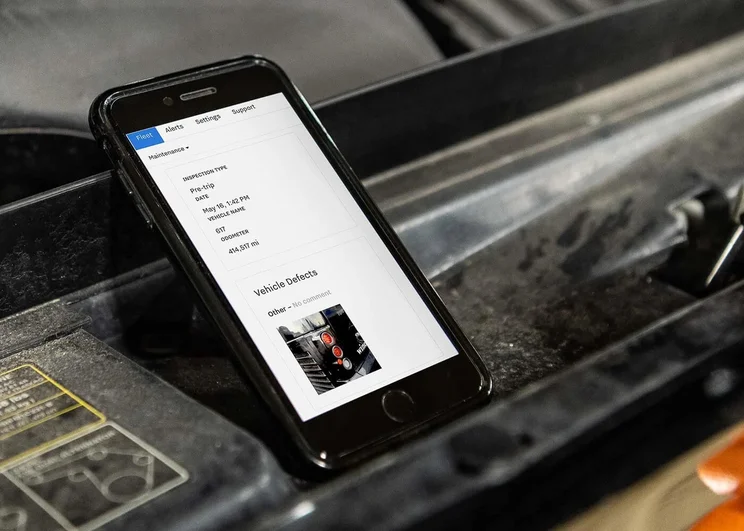
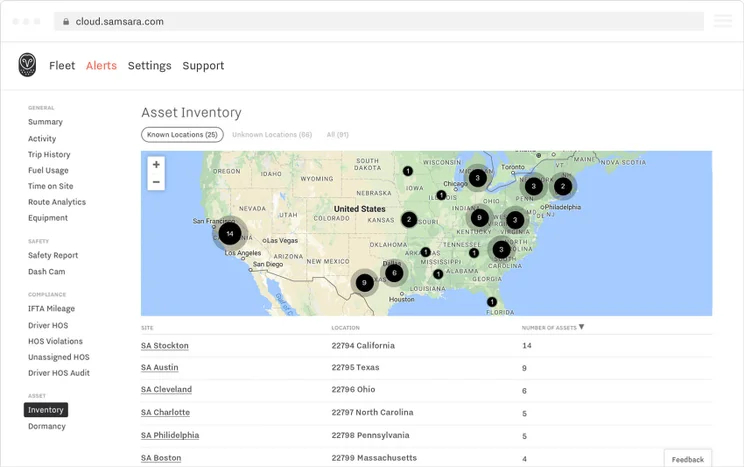
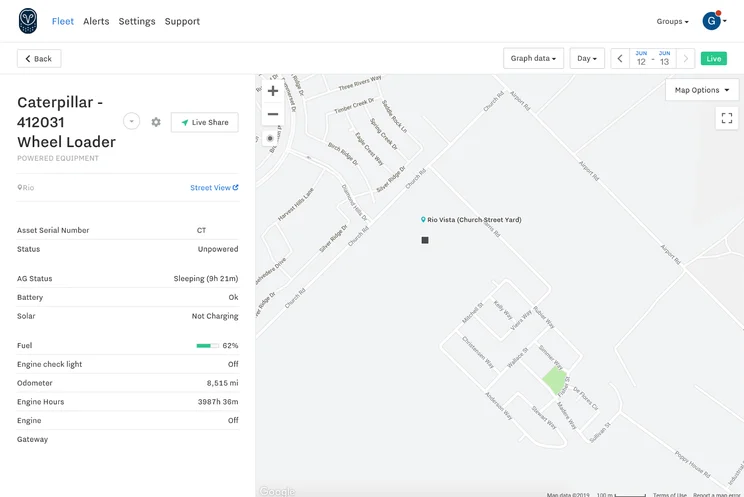

Samsara’s key features
- Unpowered and powered assets: Samsara tracks both.
- “Find my Asset” tool: This search function saves users time when looking up a specific asset.
- Alerts: Includes geofencing violations, when the asset is turned on or off, and the total engine hours for each use. This helps monitor usage and track maintenance needs.
- In-motion alerts: Triggered when assets start to move, these alerts help you react quickly to any suspicious access or suspected thefts — cargo theft has risen 82% between 2020-2024.
- Automatic reports: These cover fields including asset dormancy, detention, utilization, and “Time on Site” reports, that track how long assets stayed in customer locations.
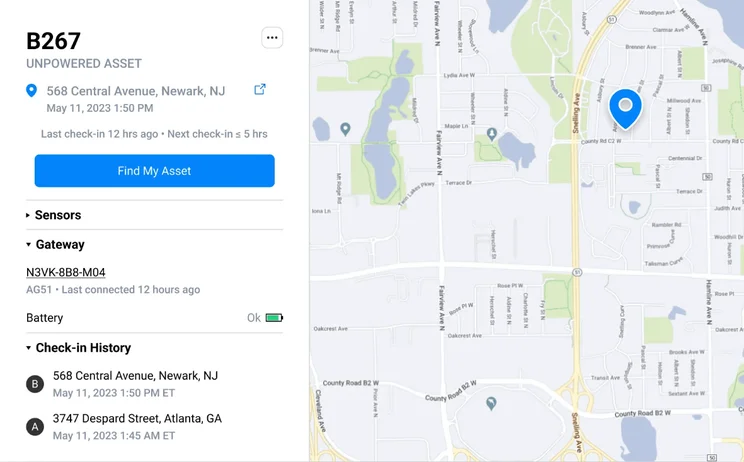
Samsara includes a check-in history for each asset. Source: Samsara
Samsara’s durable, GPS-powered asset tag units are weatherproof to withstand “high-pressure power washing”. Internal antennas power cellular connectivity and can operate anywhere in North America, the EU, and the UK. (Rival tracking service Tenna only covers North America.)
Samsara’s particularly great for any utilities or municipal operation, since its powerful tracking tools are best for high-value assets that travel to remote locations.
Read our Samsara review.
2. Tenna Asset Tracking: Great for Those With Both Fixed and Movable Assets
Starts from: Price on request
Asset tag type: GPS, RFID, barcodes
Tenna is best for businesses that have a lot of small or fixed assets in addition to powered ones, since it works with GPS Bluetooth devices, short-range RFID, and scannable barcodes. In comparison, Samsara only supports GPS devices.
Tenna Asset Tracking

In Short
-
Pros
- Covers all tagging needs with GPS, barcodes, and RFID
- Creates and tracks work orders to promote efficiency
- Alerts users when its batteries are low
-
Cons
- No in-motion alerts for tracking moveable assets
- No public pricing
Images
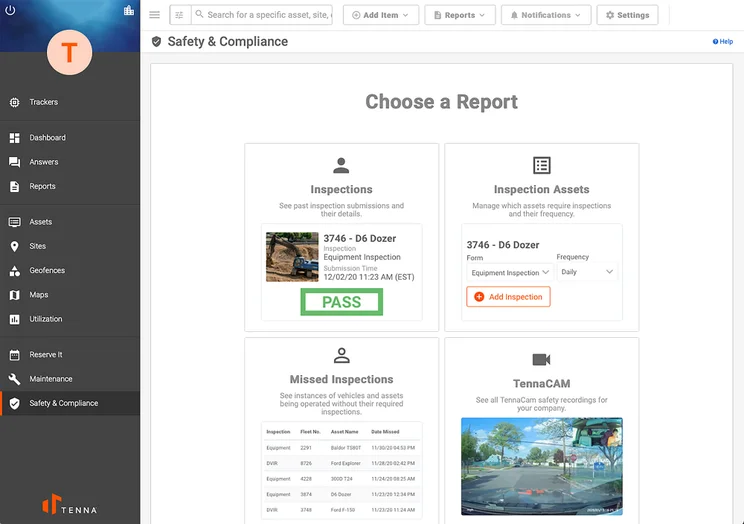
Tenna’s key features
- Great battery life: Tenna’s trackers won’t need battery replacements for seven years, beating the industry standard of five years.
- Alerts: Tenna’s GPS alerts include geofencing, usage, and maintenance scheduling notifications.
- Alert triggers: Know when assets go offline or low on battery.
- Weatherproof: The rugged devices can work for a wide range of assets, from heavy yellow iron and trailers to parts, attachments, and small tools.
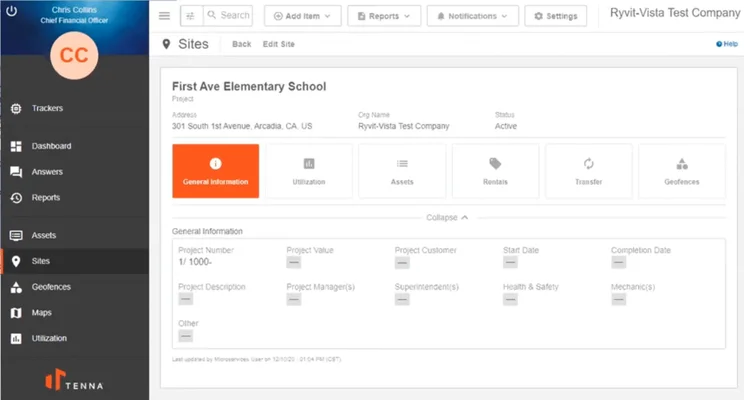
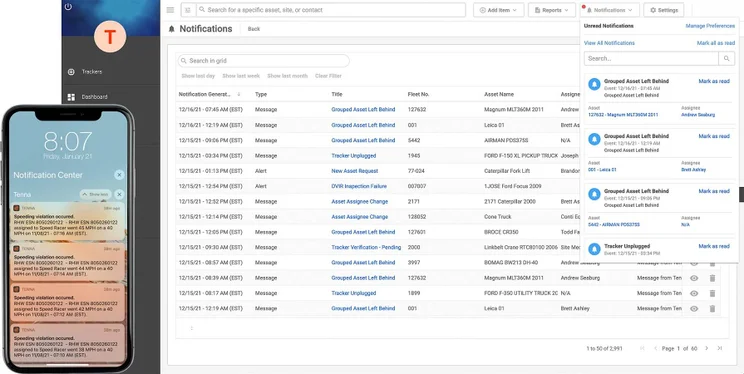
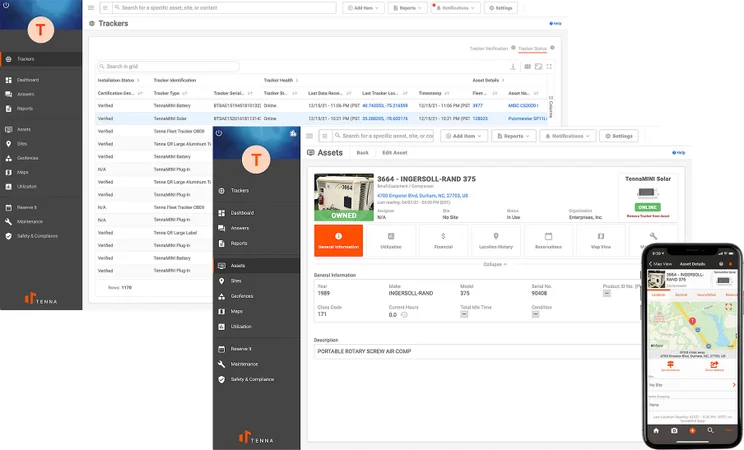
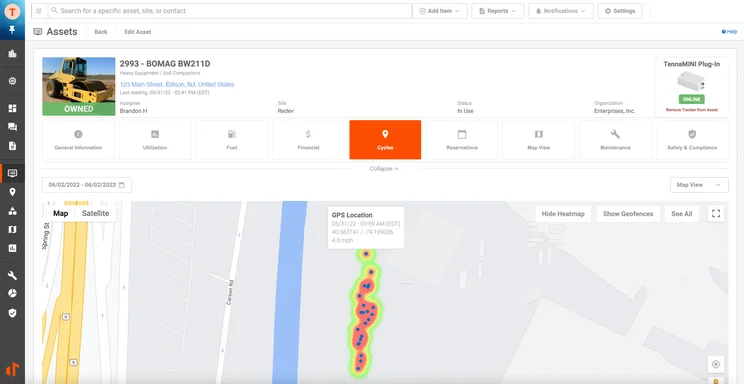
Tenna’s asset tracking product lets users associate assets with specific sites. Source: Tenna
Tenna remains particularly popular among oil and gas, construction, and landscaping companies, where assets must be durable and highly visible.
3. Verizon Connect Asset Tracking: Best for Range of Features
Starts from: Price on request
Asset tag type: GPS
Verizon Connect is a big brand, with multi-platform 24/7 support and a wide range of software that integrates with its asset trackers, from fleet management to field service. It serves any size of business.
Verizon Connect Asset Tracking

In Short
-
Pros
- Bundles hardware along with software
- Highlights maintenance needs with automatic alerts
- Tracks fuel usage and costs
-
Cons
- Just GPS tracking — no barcode system
- Learning curve can be steep
- Costs will rise with extra add-ons (fleet tracking, dash cams, etc.)
Images
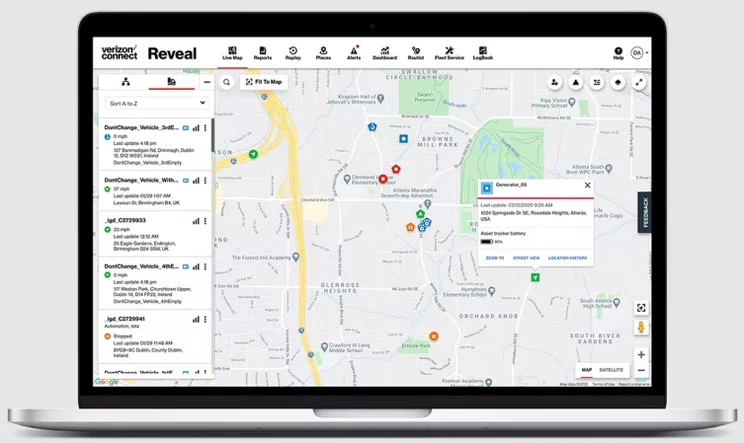
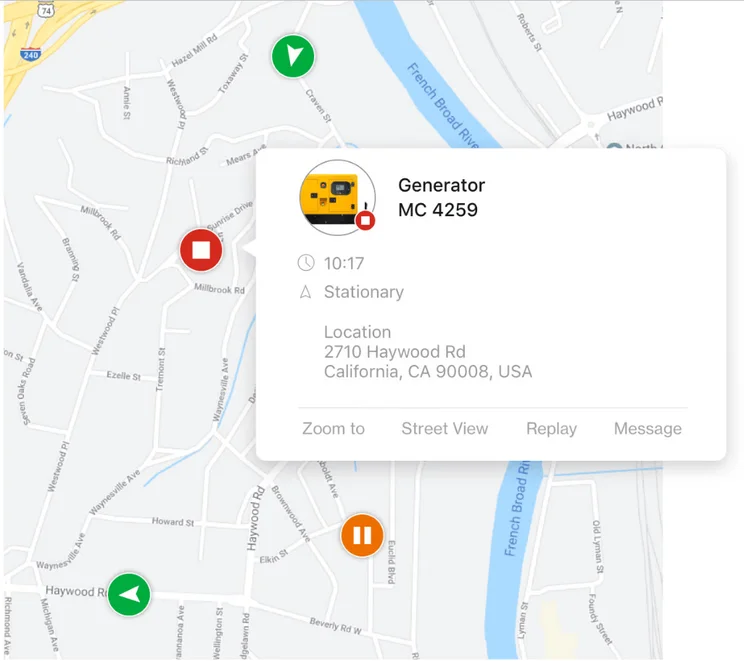
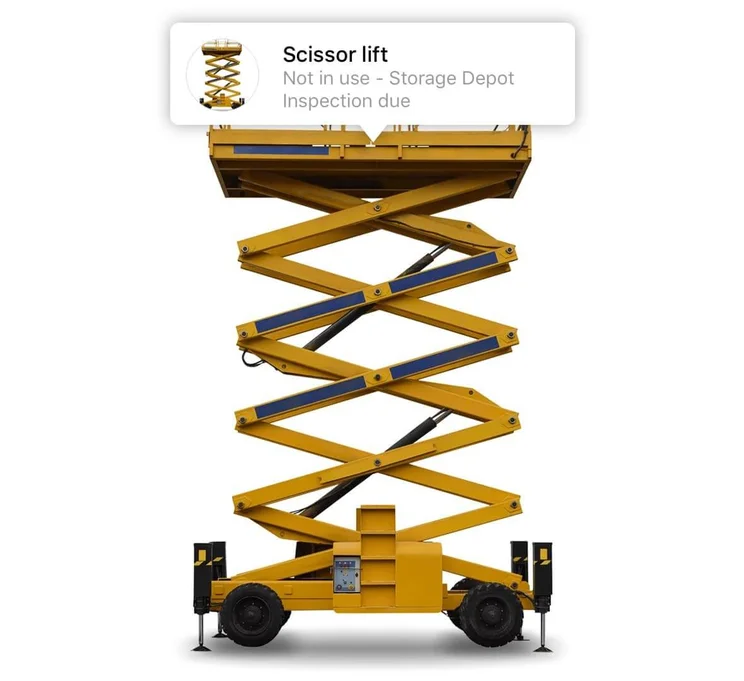
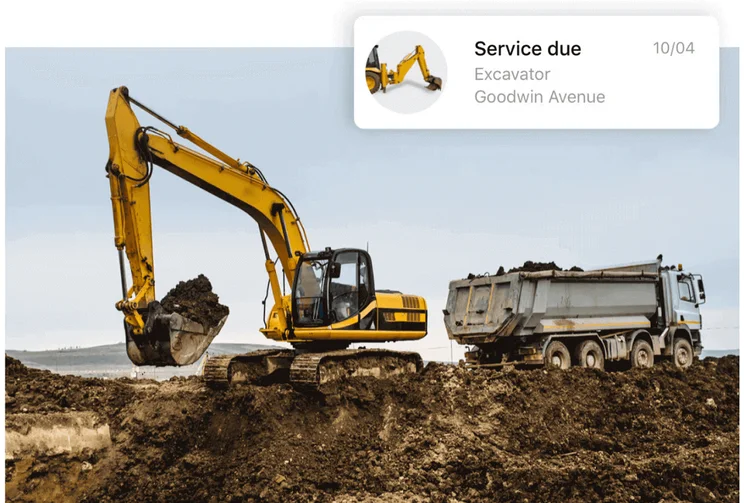
Verizon’s key features
- Real time updates: With Verizon asset tracking, managers can stay up to date on all asset locations and statuses with desktop and mobile notifications.
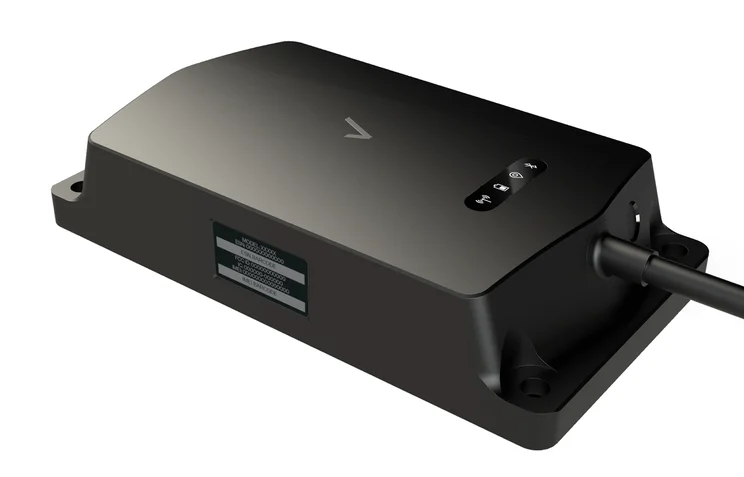
- Decent hardware: The GPS hardware comes bundled with your software subscription and is weatherproof, with a battery life of up to four years (good, though not as great as Tenna’s seven-year batteries).
- Asset tags use 3G or 4G networks: GPRS cellular network data is also available to track assets when they’re outside your network.
- Alerts: Verizon notifies users for geofencing, usage, and maintenance scheduling, with reporting times that can be customized to your needs.
- Fuel tracking: Businesses will be able to mitigate fuel theft and promote the most efficient use of fuel across their organization.
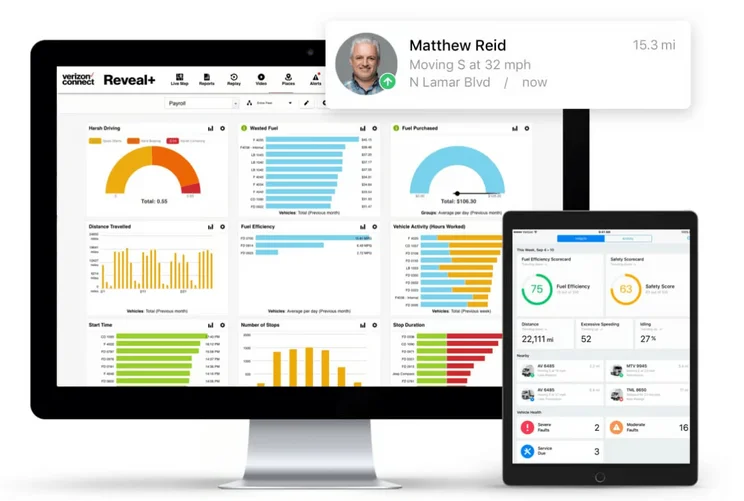
Verizon’s asset tracking program offers plenty of dashboard charts. Source: Verizon
Verizon’s alerts will help your company’s corrective maintenance management, ultimately helping boost your asset lifespans while discouraging asset misappropriation. Historical data is tracked (within the limits of Verizon’s data privacy policy), which means users can glean insights and build reports to better understand their operation.
4. Wasp AssetCloud: Good for Small Companies With Fixed Assets
Starts from: $108 per user, per month
Asset tag type: Barcode, RFID
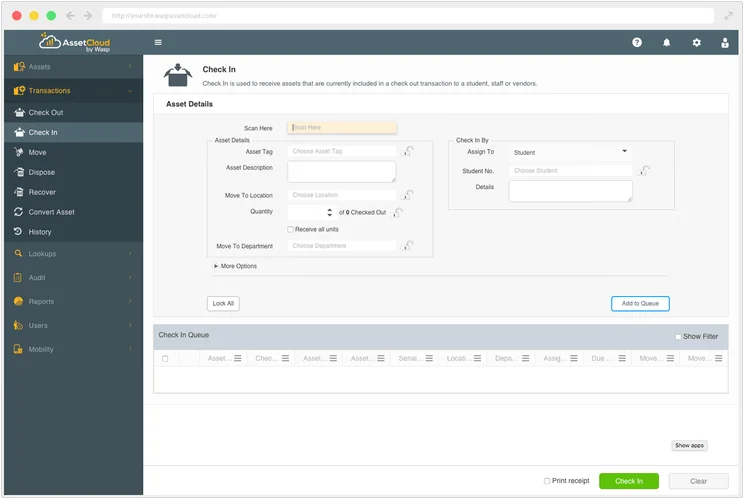
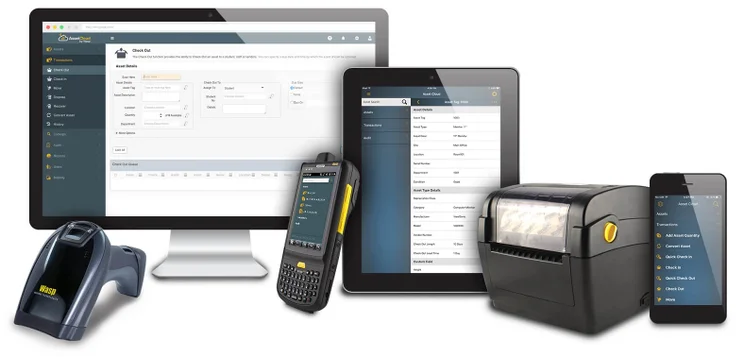
Wasp AssetCloud is best for companies with a large number of fixed assets, for a simple reason: it has the best barcodes and the best RFID tags. We recommend it for small, inventory-heavy businesses that need reporting and auditing tools, telecoms operations, and operations tracking education and school assets.
Wasp AssetCloud Asset Tracking

In Short
-
Pros
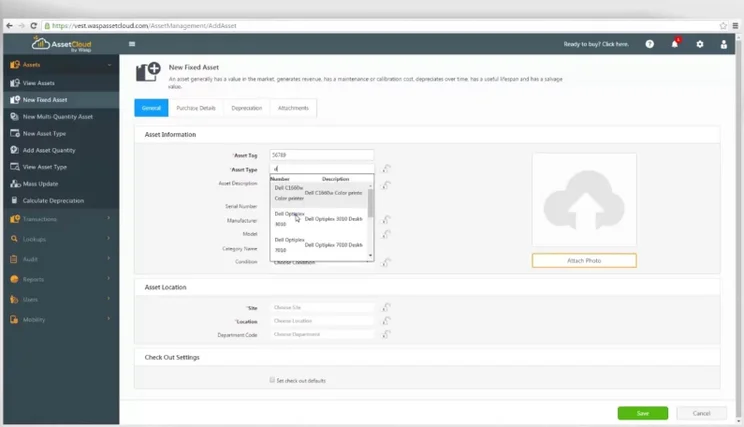
- Tracks unlimited assets
- Tracks unlimited sites
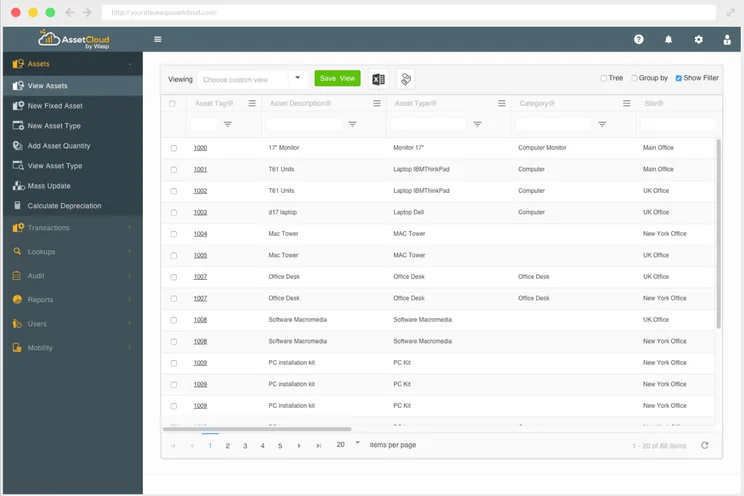
- Report templates are easy to customize for your needs
-
Cons
- No geofencing feature to track unauthorized asset movement during work hours
- Only tracks fixed assets, not moveable ones
Images
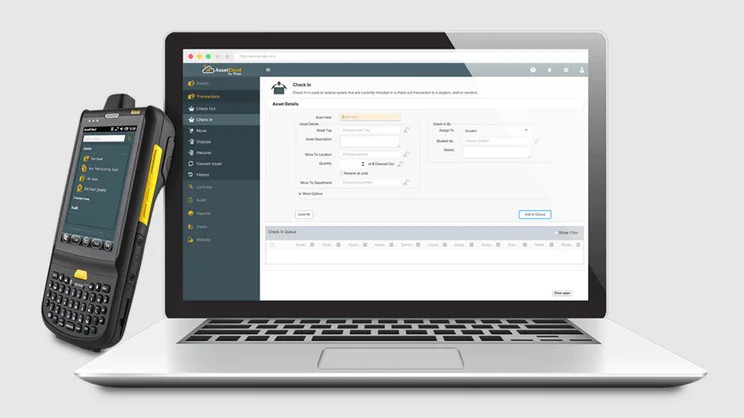
Wasp AssetCloud’s key features
- Wasp AssetCloud’s pricing is public:
- Basic WaspAsset Cloud: $108 per month, for one user
- Basic WaspAsset OP (self-hosted): $163 per month, for one user
- Complete WaspAsset Cloud: $250 per month, for five users
- Complete WaspAsset OP (self-hosted): $375 per month, for five users
- Enterprise WaspAsset Cloud/OP (self-hosted): Custom
- Multiple sites and unlimited custom fields: These are supported with Complete (but not with Basic).
- Depreciation, transaction histories, and audits: These features are supported on all plans, giving users the details they need for paperwork.
- A check-in/check-out system: This makes it easy and quick to assign equipment to the right user.
- “Multi-quantity” asset tracking: A feature that lets you consolidate identical items, to avoid creating a new entry for each one.
- Email alerts: Can be auto-sent daily or at multiple customized times throughout the day.
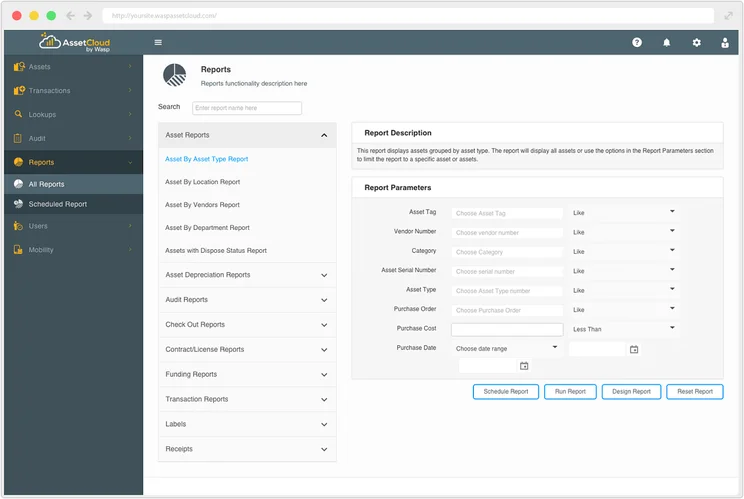
The Wasp AssetCloud software lets users run a range of different reports. Source: Wasp AssetCloud
Geofencing and in-motion alerts are not available, since these are GPS-only. Maintenance scheduling and work orders are supported on all plans except Basic. Read our Wasp AssetCloud review to learn more about Wasp’s services, or check out our dedicated guide to all the best fixed asset tracking software tools for more options.
5. Freshservice: Best for IT Businesses
Starts from: $49 per user, per month
Asset tag type: Barcodes, QR codes
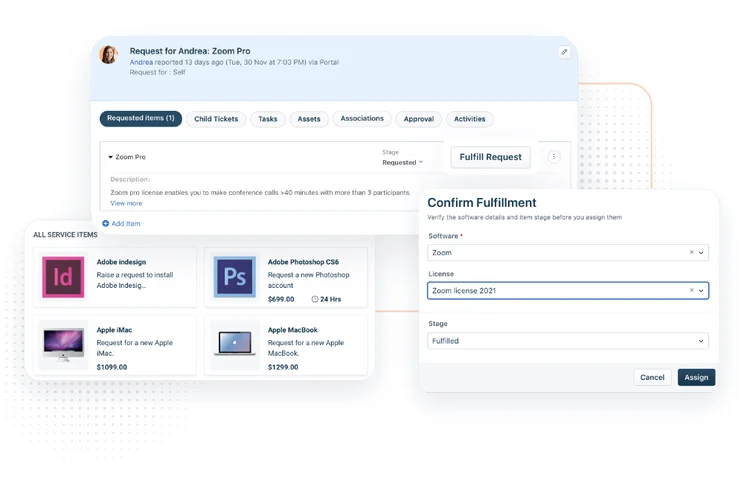
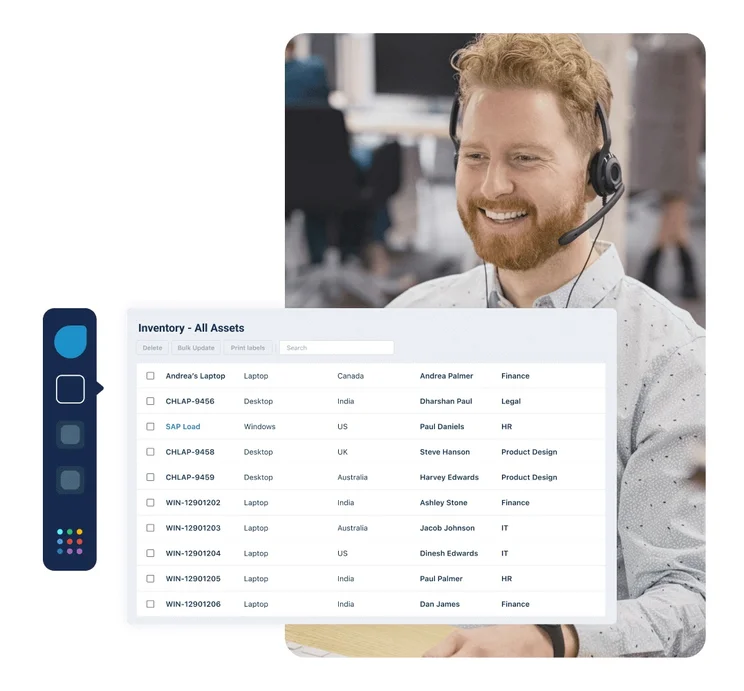
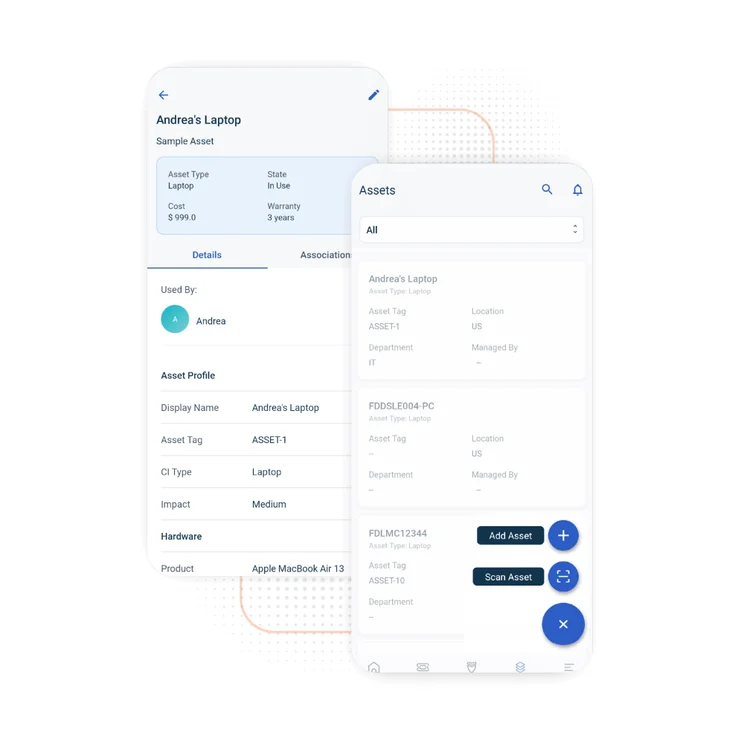
IT service management teams need many features that Freshservice offers, from a company knowledge base to a ticket support system and internal workspaces. Freshservice also simplifies the process of signing out assets for specific projects.
Freshservice

In Short
-
Pros
- Connects assets with work orders, so you know who has what
- Includes IT service management tools
- Free AI assistant available as an add-on
- Asset tracking starts at $49/user/month
-
Cons
- Capped at 100 assets
- Adding more costs $125/500 assets/month
- No GPS tracking offered
Images

Freshservice’s key features
- Asset limits: 100 managed assets are supported with each plan. Further upgrades cost $125 per 500 assets, per month.
- Barcodes and QR codes: Both are supported with 3G connectivity (not GPS trackers, like Samsara or Tenna).
- Usage alerts are not supported: Managers won’t be instantly notified if an asset is misused. Incident reports can still document this afterwards.
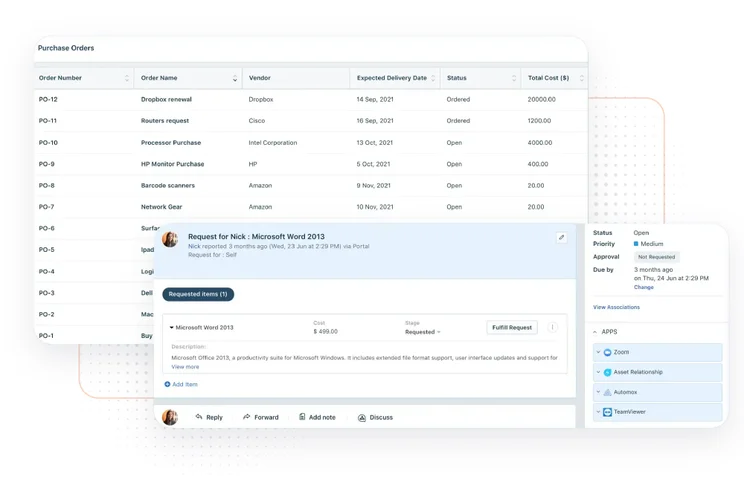
- Assign assets to specific agents: Administrators can track work orders, saving time and resources.
- Freddy AI Agent: This chatbot can help users in more than 40 languages.
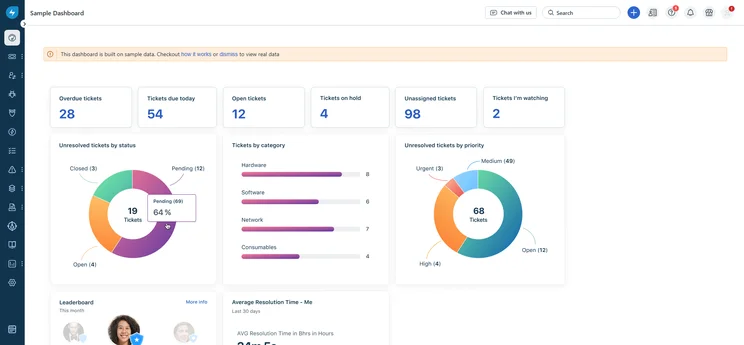
Freshservice has a main dashboard that includes at-a-glance charts to highlight key data. Source: Tech.co testing
Other asset trackers support work orders as well (Tenna and Wasp AssetCloud), but Freshservice stands out for its additional IT management tools.
Freshservice offers four plans, but only three support asset tracking:
- Growth: $49 per user, per month
- Pro: $99 per user, per month
- Enterprise: Custom
Read our Freshservice review.
Types of Asset Management Software
The concept of an “asset” is a broad business term: it can refer to a laptop, a construction crane, or a property deed. Here are the main types of asset software.
- Fixed asset management software: These systems work with assets that are designed to stay within one location. These are often unpowered, like furniture, but can include small power tools or desktop computers.
- IT asset management: This is a common subtype of a fixed asset management software and is designed to track typical office supplies, from printers to laptops.
- Movable asset management software: These systems monitor large assets with GPS, tracking them between warehouses or across state lines.
- Digital asset management software: These systems are for software asset management, which refers to tracking digital multimedia files, including deeds, tax documents, or surveillance footage.
- Real estate asset management software: This is a common subtype of digital asset tracking system, since this industry deals with key digital assets like leases, in addition to digitally tracking occupancy rates and property maintenance schedules.
- Enterprise asset management software: This all-in-one system tracks fixed, movable, and digital assets within the same centralized system. It’s a powerful and expensive option, best used by large and growing operations.
With the right software, you can build an asset tracking system that works for your specific business needs.
About Our Research
Tech.co compares providers across multiple criteria, including the features that the software provides, how easy it is to use, and the customer service experience. Other key criteria include:
- Price: We rate the pricing and value of each provider, and check for a free tier or a free trial.
- Types of asset trackers: Barcodes are best for smaller businesses, but businesses operating across multiple sites will want something that can offer real-time tracking, like GPS or RFID tags.
- Alerts: Some platforms can tell you when an asset leaves a certain location or is being used outside of work hours.
- Mobile apps: We look at app quality and access user reviews.
For more on our process, read our in-depth research guide.
Our research finds Samsara to be the best asset tracking software available. It offers powerful GPS trackers, impressive support options, and key alerts for maintenance needs and geofencing.
Tenna is another top-notch option and its support for RFID and barcodes, as well as GPS, make it a versatile tracker. Tenna beats Samsara in a few areas, offering work order support, so managers can assign assets to specific jobs.
FAQs
Verizon Connect typically bundles its weatherproof GPS hardware with the software subscription. Samsara and Tenna also offer upfront purchases, in addition to leases with multi-year contracts. For barcode systems, you will need to purchase hardware separately.
Barcode and QR code systems can be online in less than an hour if you already have your asset list ready. GPS tracking systems for movable assets will require physical installation on each unit, which can take days.
Nearly all asset tracking providers have multi-layered security protocols. Companies like Tenna host customer data on secure platforms like Amazon Web Services and use HTTPS-level browser protection and hashed passwords for all users. Providers that offer self-hosting (like Wasp AssetCloud) will not provide security themselves.
Freshservice has a ticket support system and internal workspaces, so it has the most IT service management tools.
If you click on, sign up to a service through, or make a purchase through the links on our site, or use our quotes tool to receive custom pricing for your business needs, we may earn a referral fee from the supplier(s) of the technology you’re interested in. This helps Tech.co to provide free information and reviews, and carries no additional cost to you. Most importantly, it doesn’t affect our editorial impartiality. Ratings and rankings on Tech.co cannot be bought. Our reviews are based on objective research analysis. Rare exceptions to this will be marked clearly as a ‘sponsored’ table column, or explained by a full advertising disclosure on the page, in place of this one. Click to return to top of page


