


We may receive a commission from our partners if you click on a link to review or purchase a product or service. Click to Learn More
After spending over 100 hours collecting data across eight categories and 51 subcategories, we concluded that Wix is the superior ecommerce website builder to Shopify.
Wix has better tools for growing your business, including booking, social media, and email marketing tools. It also has better AI tools for building a site from scratch, and while Shopify has a cheaper starting plan ($5 per month), Wix is more affordable in general.
Shopify is a great option for creating an online store for large businesses with established customer bases. It has more sales features than Wix, such as built-in shipping label creation, and you can list an unlimited number of products, in comparison with Wix’s 50,000.
- Website features: Wix offers more website functionality, including built-in social media and email marketing.
- Pricing: While Shopify starts at just $5 per month, Wix has better value plans overall.
- Free plan: Wix offers a free plan and a 14-day free trial for premium plans, while Shopify has no free plan and a three-day free trial for premium plans.
- Products: Shopify allows for unlimited products, while Wix sets a limit of 50,000 products.
We take our impartial research and analysis seriously, so you can have complete confidence that we’re giving you the clearest, most useful product recommendations.
Here’s how our ecommerce website builder research came about, by the numbers:
- More than 100 hours
- Eight categories of investigation
- 51 subcategories
- 283 individual evaluations
The primary categories of investigation included website functionality (15%), design features (15%), sales features (30%), help and support (15%), pricing (10%), and user experience (15%).
|
Cheapest price
|
Special deal
|
Free plan
|
Free trial
|
Transaction fees
|
Pros
|
Cons
|
App store
Is there an app store available to utilize third-party integrations?
|
Templates
How many templates are available?
|
Maximum products
The maximum number of products you can sell in an online store
|
Who should?
Who should be using this platform?
|
Who shouldn't?
Who shouldn't be using this platform?
|
||
|---|---|---|---|---|---|---|---|---|---|---|---|---|---|
 |
 |
||||||||||||
|
Wix |
Shopify |
||||||||||||
|
$15.30/month with code TAKE10 |
$1/month for first 3 months |
||||||||||||
|
|
|
||||||||||||
|
14-day free trial |
3-day free trial |
||||||||||||
|
2.9% + $0.30 |
2.9% + 30¢ |
||||||||||||
|
|
||||||||||||
|
|
||||||||||||
|
|
|
||||||||||||
|
2,000+ |
900+ |
||||||||||||
|
50,000 |
Unlimited |
||||||||||||
|
|
||||||||||||
|
|
- Shopify is specifically geared towards ecommerce, while Wix is a general website builder with robust ecommerce functionality.
- Wix offers more website functionality and superior design features to Shopify, while Shopify has stronger sales tools.
- Shopify is less affordable, with its most expensive plan reaching $2,300 per month. By comparison, Wix’s most expensive plan is $159 per month.
- Wix has superior AI functionality, including Wix Harmony, its hybrid vibe coding and AI website builder.
- Wix has a free plan and Shopify doesn’t. It will enable you to create and publish a website, but you won’t have access to a custom domain.
Is Wix a Good Ecommerce Website Builder?
Yes, Wix is the best overall ecommerce website builder on the market. It combines robust functionality with ease of use, extensive marketing and social media tools, and generous pricing.
While Shopify has stronger sales tools in total, Wix has an impressive feature catalog for driving sales. Standout examples include customer insights and other key performance metrics, and an AI email marketing builder.
These features single Wix out as a great solution for businesses trying to grow their sales.
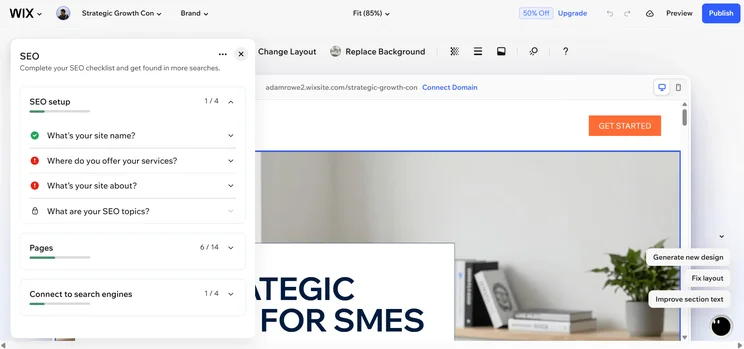
With Wix’s built-in SEO tools, you can get discovered online more easily. Source: Tech.co testing
With Wix’s new AI-enabled website builder, Wix Harmony, users can build a full-stack ecommerce website in seconds. In contrast, Shopify simply lets you generate AI themes, which aren’t as flexible or customizable.
Wix has a library of more than 500 third-party apps, including TikTok Ads, Wix Bookings, and WhatsApp Marketing, so you can reach a wider customer base.
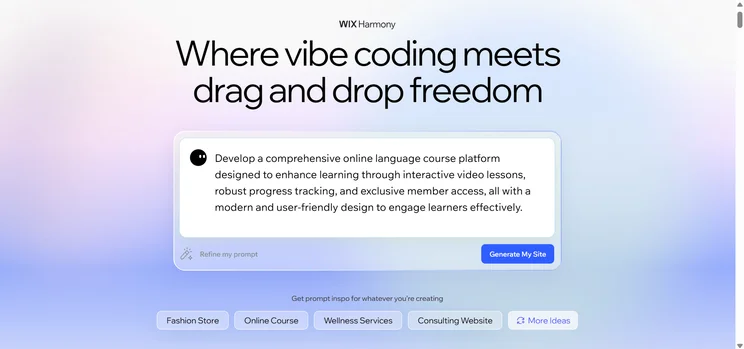
Entering a prompt in Wix Harmony is simple with its chat-like interface. Source: Tech.co testing
Both Wix and Shopify offer a wide variety of selling channels, including Google Shopping, eBay, and Amazon, as well as various social media platforms. However, Wix has this functionality built in to the platform, while Shopify requires a third-party app, which can cost extra.
Wix

In Short
-
Pros
- Customizable AI chatbot builder
- Email marketing that matches site theme
- 24/7 expert support across all parts of site creation platform
- AI image generator and advanced editing tools
-
Cons
- Expensive processing fees compared with other builders
- Vast design functionality is intimidating for beginners
- Inability to change site theme after publishing
- AI can be repetitive and inaccurate
Pricing
- Free version available
- Light: $17/month
- Core: $29/month
- Business: $39/month
- Business Elite: $159/month
- Free domain with 1-yr contract
Images
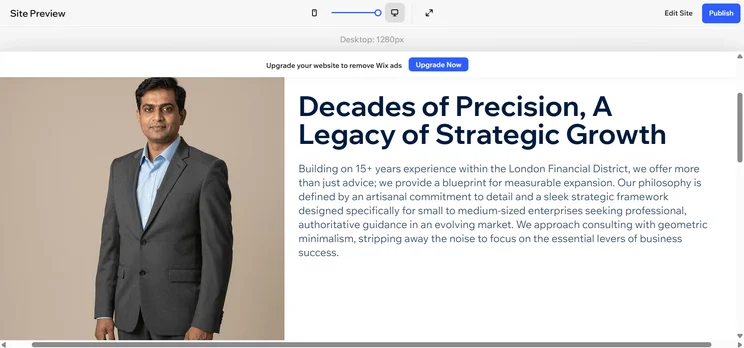
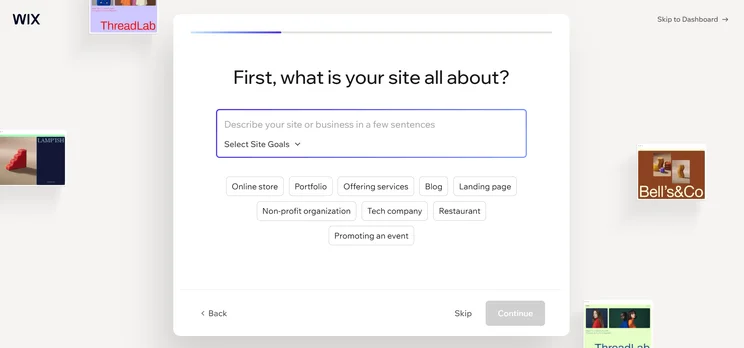
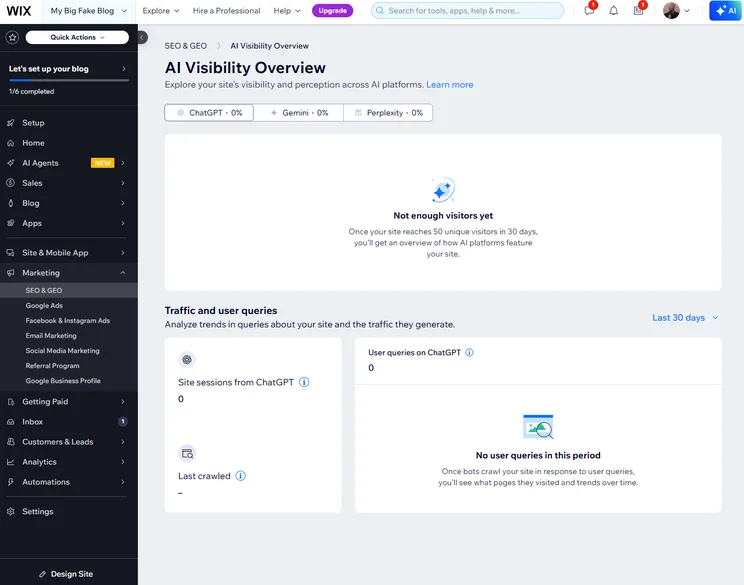
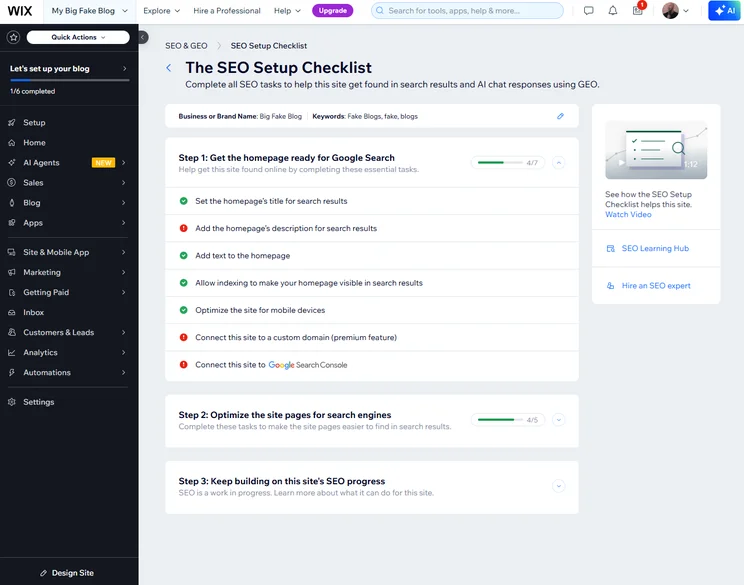
Not only is Wix our favorite overall AI ecommerce website builder, it’s the best overall AI website builder, period.
It has the most comprehensive range of features for designing your site, including some seriously impressive design templates. It’s pretty easy to use and it’s very fairly priced. In other words, it’s hard to beat.
Simply put, I would recommend Wix for most small and medium-sized businesses looking to sell online, no matter your vertical or industry.

Is Shopify a Good Ecommerce Website Builder?
Yes, Shopify is an excellent ecommerce website builder. Wix is superior overall, but Shopify is a better platform for large businesses that make a high volume of sales.
Standout features in Shopify’s ecommerce toolkit include AR and VR integrations, in-house accounting tools, and the ability to list an unlimited number of products. For this reason, it’s an outstanding solution for enterprises with varied inventories.
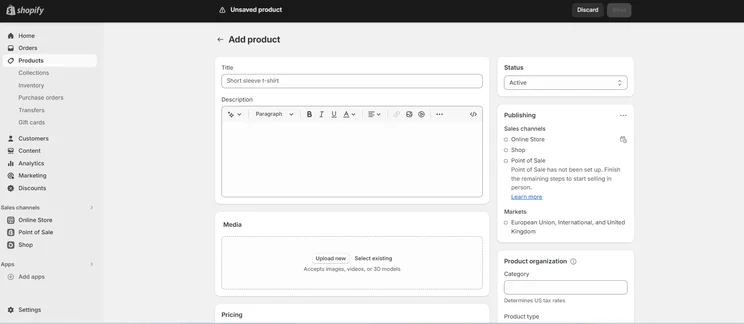
We found it easy to add products in Shopify with basic categorization features. Source: Tech.co testing
Shopify supports over 100 payment methods, including PayPal, Stripe, Square, Amazon, and Apple Pay. In contrast, Wix supports over 80 providers.
Shopify has outstanding checkout features for driving conversions, including an extensive array of tools to customize the checkout process and seamlessly add loyalty programs, post-purchase surveys, and more. Standout examples include its “One-Click Checkout” tool.
It’s easy to manage your product catalog with Shopify, thanks to its bulk import feature that lets you add new products in large groups. This is particularly helpful if you’ve got a new line of similar products, for example.

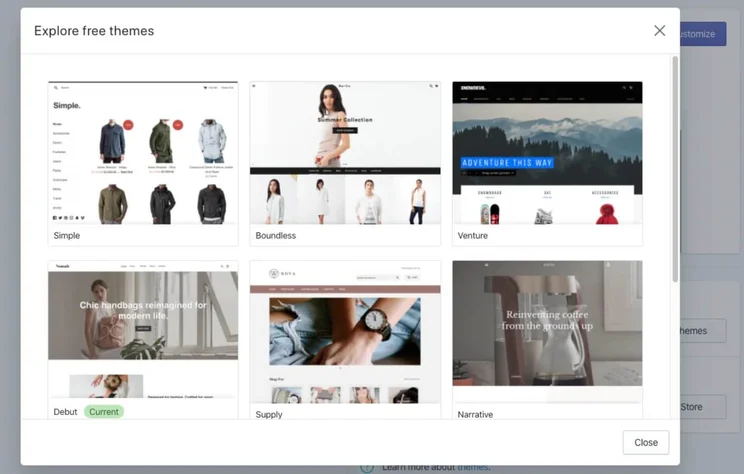
The Shopify AI store builder takes a natural language prompt and creates an online store for you in seconds. Source: Tech.co testing
Shopify

In Short
-
Pros
- Helpful and predictive website building experience
- Massive app selection for unlimited customizability
- Shopify Magic AI tool generates product descriptions
- Shopify Sidekick (AI assistant)
-
Cons
- Limited customization options
- Few built-in features
- Apps cost extra
- High transaction fee without Shopify Payments
Pricing
- Basic: $29/month
- Grow: $79/month
- Advanced: $299/month
- Plus: $2,300/month
- $1/month for first 3 months
- Transaction fees from 2.9% + 30¢
Images
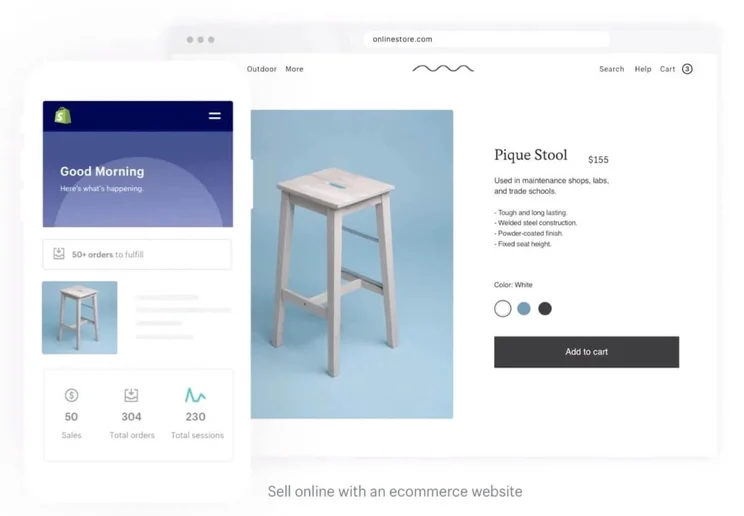
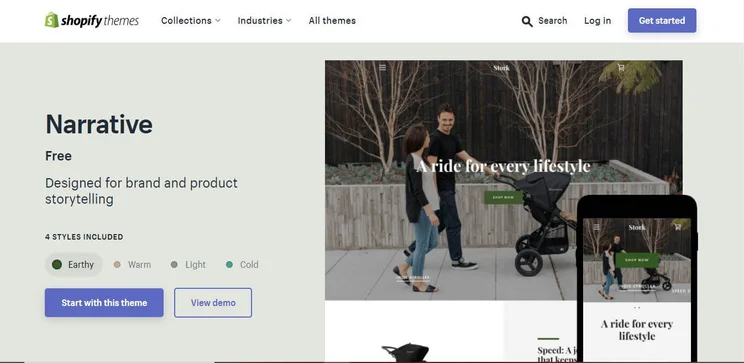
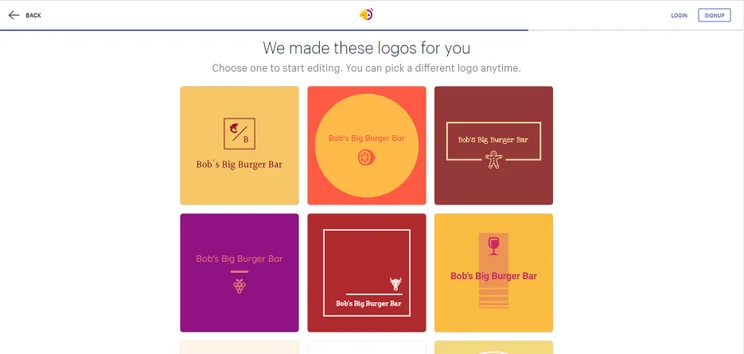

Shopify is the ecommerce juggernaut that powers millions of businesses around the world, and for good reason. It has a seriously advanced sales toolkit, generous transaction fees, and some of the best checkout features in the game.
While smaller businesses will likely find themselves paying for a lot of surplus functionality, larger businesses with a high volume of customers will not find a better ecommerce solution than Shopify. It’s as simple as that.
How Much Do Wix and Shopify Cost?
While Shopify has a lower entry price than Wix, it doesn’t have a free plan, and the rest of its plans are significantly more expensive.
How much does Wix cost?
- Free plan — Free
- Light plan — $17 per month
- Core plan — $29 per month
- Business plan — $39 per month
- Business Elite — $159 per month
|
Plan
|
Special deal
|
Price (1-year contract)
The price per month you'll pay if you choose to be billed annually
|
Price (1-month contract)
The price per month you'll pay if you choose to be billed monthly
|
Ecommerce
|
|---|---|---|---|---|
|
Free |
Light |
Core |
Business |
Business Elite |
|
$0 |
$15.30/month with code TAKE10 |
$26.10/month with code TAKE10 |
$35.10/month with code TAKE10 |
$143.10/month with code TAKE10 |
|
$0 |
$17/month |
$29/month |
$39/month |
$159/month |
|
$0 |
$24/month |
$36/month |
$46/month |
$172/month |
|
|
|
|
|
|
How much does Shopify cost?
- Starter plan — $5 per month
- Basic plan — $29 per month
- Grow plan — $79 per month
- Advanced plan — $299 per month
- Plus plan — $2,300 per month
|
Plan
|
Price (1-year contract)
The price per month you'll pay if you choose to be billed annually
|
Price (1-month contract)
The price per month you'll pay if you choose to be billed monthly
|
Ecommerce
|
|---|---|---|---|
|
Basic |
Grow |
Advanced |
|
|
$29/month |
$79/month |
$299/month |
|
|
$39/month |
$105/month |
$399/month |
|
|
|
|
|
What Are the Best Alternatives to Wix and Shopify?
Here are some alternative AI ecommerce website builders that we’ve tested:
- Squarespace: Because of its beautiful array of templates, this is the best option for design-conscious businesses, including bespoke retailers.
- Hostinger: Hostinger is the cheapest option on the market, with ecommerce plans starting at just $3.99 per month with an extra three months for free.
- GoDaddy: GoDaddy is the best option for businesses that want to get a site online quickly. During our tests, we were able to create a website in under 30 seconds.
|
Overall score
All Tech.co research categories, condensed into one score
|
Cheapest price
|
Special deal
|
Cheapest ecommerce plan
The cost for a plan that allows users to build and operate an online store
|
Free plan
|
Free trial
|
Templates
How many templates are available?
|
||
|---|---|---|---|---|---|---|---|---|
|
|
 |
|
 |
 |
||||
|
Wix |
Squarespace |
Shopify |
GoDaddy |
Hostinger |
||||
|
4.8
|
4.5
|
4.2
|
4.2
|
4.1
|
||||
|
$17/month |
$19/month |
$29/month |
$9.99/month |
$2.99/month |
||||
|
$15.30/month with code TAKE10 |
$17.10/month with code TC10 |
$1/month for first 3 months |
Save 54% with annual contract |
$2.69/month with code TECH |
||||
|
$29/month |
$19/month |
$29/month |
$20.99/month |
$3.99/month |
||||
|
|
|
|
|
|
||||
|
14-day free trial |
14-day free trial |
3-day free trial |
7-day free trial |
14-day free trial |
||||
|
2,000+ |
180+ |
900+ |
200+ |
400+ |
How We Tested Wix vs Shopify
We take our impartial research and analysis seriously, so you can have complete confidence that we’re giving you the clearest, most useful product recommendations.
After conducting an initial exploration to identify the most relevant, popular, and established tools in the market, we put them through their paces with hands-on testing to see their real strengths and weaknesses. In this case, we put 16 website builder products to the test across 398 areas of investigation.
Based on years of market and user needs research, we’ve established a website builder testing methodology that scores each product in six core categories of investigation and 33 subcategories. This covers everything, from customer feedback to design, ease of use, and more.
Our main testing categories for website builders are:
- Website features: The capabilities and functionalities offered by a website builder, e.g. blog functionality, SEO capability, and marketing capacity.
- Design functionality: The aesthetic appeal and visual layout of a website created using a website builder. It encompasses aspects such as page templates and customizable themes.
- Customer satisfaction: External customer opinion. This is the feedback and ratings given by customers who have used a particular website builder — the market position and reputation a website builder holds.
- User experience: How user-friendly and intuitive a website builder is for people with varying levels of technical expertise.
- Value for money: The balance between the cost of a website builder and the benefits it provides. It considers factors such as pricing plans, subscription models, and available features.
- Help and support: The assistance and resources available to users when they encounter issues or need guidance while using a website builder.
When it comes to calculating a product’s final score, not all testing areas are weighted evenly, as we know some aspects matter more to our readers than others, which are simply “nice to have”. After hundreds of hours, our process is complete, and the results should ensure you can find the best solution for your needs.
At Tech.co, we have a number of full-time in-house researchers, who re-run this testing process regularly, to ensure our results remain reflective of the present day.
Yes, Wix is a better ecommerce website builder than Shopify. Our research team concluded that it is better suited to a wider variety of businesses, due to its impressive array of in-house capabilities, affordable plans, and powerful AI tools.
Due to the fact that you can list an unlimited number of products, Shopify is a great option for large businesses that make a high volume of sales. Its steep pricing will deter a lot of smaller businesses, though.
Make sure to look at our ecommerce builder comparison chart to view some of the other options out there.
Frequently Asked Questions
Both Shopify and Wix charge fees for each transaction, and the amount depends upon which plan you opt for. For instance, Wix charges 2.9% + 30¢ per transaction on its Light plan ($17 per month) and Shopify charges the same on its Basic plan ($29 per month).
To migrate your ecommerce platform from Wix to Shopify, you can manually export your products to a CSV file, then import them into Shopify. Both providers will have guides on how to do this on their respective websites.
Yes, both Wix and Shopify support dropshipping on all of their plans. Shopify integrates with a wider range of dropshipping apps, meaning that it is a more natural fit for dropshippers.
If you click on, sign up to a service through, or make a purchase through the links on our site, or use our quotes tool to receive custom pricing for your business needs, we may earn a referral fee from the supplier(s) of the technology you’re interested in. This helps Tech.co to provide free information and reviews, and carries no additional cost to you. Most importantly, it doesn’t affect our editorial impartiality. Ratings and rankings on Tech.co cannot be bought. Our reviews are based on objective research analysis. Rare exceptions to this will be marked clearly as a ‘sponsored’ table column, or explained by a full advertising disclosure on the page, in place of this one. Click to return to top of page


