
We may receive a commission from our partners if you click on a link to review or purchase a product or service. Click to Learn More
An electronic logging device — also known as an ELD — is a piece of technology used by commercial drivers such as truckers to record driving time and hours of service (HOS) records.
That’s not all these devices can do, though. The best ELD devices will allow you to monitor a lot more. This is particularly true when an ELD device is paired with a top fleet management software.
In this guide, you’ll learn what an ELD is, how it works, why you need one, and whether or not you should invest in the technology today.
What Is an Electronic Logging Device (ELD)?
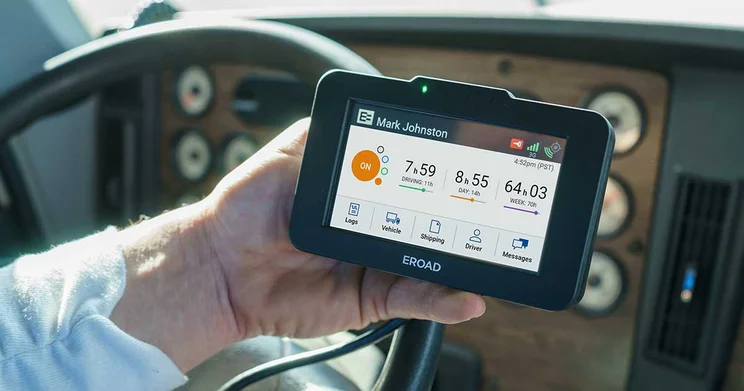
An electronic logging device (ELD) is a piece of digital hardware used to track the hours of those that drive commercial motor vehicles. The device is often equipped with GPS technology, a small display, and a dash cam, allowing it to monitor other metrics, including vehicle engine data.
What Does an ELD Do?
While the primary purpose of an ELD is to automatically track the hours of service for commercial motorists, these devices can actually do a lot more. Here are some of the things an ELD can do:
- Monitor engine health – You’ll be able to get helpful notifications that let you know when maintenance is required.
- Provide location/ignition data – GPS tracking allows for real-time location data, as well as idle status for gap mileage reports.
- Create reports – An ELD can help you provide robust reporting for fuel and other tax.
- Integrate with fleet management software – To get the most out of an ELD, pair it with a full-on fleet management software for even more functionality.
You’re probably wondering how an ELD gets all this information in the first place. It depends on the particular device but quite simply, it connects directly to the engine, either through the diagnostics port or a wireless connection.
Check out our how to use an ELD guide for more information
What Is the ELD Rule?
The ELD Rule, also known as the ELD Mandate, is a government regulation that requires commercial drivers to record their hours on an electronic logging device (ELD).
This federal law requires virtually all of the millions of truck and delivery drivers in the US to use these devices, with only a few ELD exemptions that apply to specific cases.
Check out our ELD Mandate guide for more information
What Are the Benefits of an ELD?
Obviously, because of the ELD rule, many commercial drivers are forced to use an ELD. Still, just because you’re forced to use something, doesn’t mean it offers any fewer benefits for your driving experience.
If you’re one of the few that are exempt from having to use an ELD or you just want to feel better about adding a piece of hardware to your rig, here are some of the benefits of using an ELD:
Better driver safety
The reason that ELDs are so popular, and why the ELD Mandate is in effect, is because these devices can help you prevent commercial motorists for driving for too long. The hours of service logs recorded by an ELD are used to regulate how long a driver can be on the road, as this is one of the leading causes of accidents among truckers.
Safer drivers mean higher employment numbers, too: With 38% of drivers citing ‘long hours’ as a key reason for leaving, a simple, effective ELD helps managers and drivers log hours efficiently and improve work-life balance.
Improved fuel efficiency
In addition to the tracking hours of service on commercial vehicles, an ELD can help you track other valuable metrics, like miles driven and idle status. This will let you know if you’re wasting too much gas on the road, and improve fuel efficiency by preventing unnecessary idles and improving route optimization.
Lower maintenance costs
An ELD can monitor your vehicle health, which means you’ll learn about potential maintenance requirements before they become a serious problem. This preventative maintenance costs infinitely less than corrective maintenance, so you’ll be able to save big on repair costs in the short term and the long run.
Easier regulation compliance
Naturally, using an ELD means that you are compliant with the ELD rule, but there are other government regulations that some drivers must adhere to. For example, ELDs can provide you with all the reporting you need to be compliant with the fuel tax (IFTA) and International Registration Plan (IRP) mileage requirements.
An ELD is an electronic logging device used by commercial drivers to track hours of service, as well as a wide range of other convenient and helpful functionalities. These tools work best when pair with the top fleet management software, along managers to get a full picture of their fleet in real time.
As we’ve demonstrated, an ELD can be a vital addition to your driving experience, providing valuable insights that improve driver safety, lower maintenance costs, and generally make driving commercially easier.
If you’re looking to get started with a device today, check out our guide to the best ELD solutions, so you can find one that fits your particular needs.
If you click on, sign up to a service through, or make a purchase through the links on our site, or use our quotes tool to receive custom pricing for your business needs, we may earn a referral fee from the supplier(s) of the technology you’re interested in. This helps Tech.co to provide free information and reviews, and carries no additional cost to you. Most importantly, it doesn’t affect our editorial impartiality. Ratings and rankings on Tech.co cannot be bought. Our reviews are based on objective research analysis. Rare exceptions to this will be marked clearly as a ‘sponsored’ table column, or explained by a full advertising disclosure on the page, in place of this one. Click to return to top of page


