
We may receive a commission from our partners if you click on a link to review or purchase a product or service. Click to Learn More
The best phone system for hotels is Zoom Phone, because it offers the largest catalog of call management features in our research, as well as advanced training features for high employee turnover and a low starting price of only $16 per user, per month.
In our research of 10 top VoIP providers, we found Zoom is the best for hotels, but other top providers include Dialpad for automation, Net2Phone for international chains, RingCentral for quick setup, and Nextiva for customer communication.
Our research methodology to evaluate the best hotel phone systems included:
- 10 VoIP providers researched
- 100 hours of hands-on research
- Eight core categories of investigation
- 44 subcategories of investigation
The eight core categories of investigation were call management features (25%), price (25%), hardware integrations (5%), software integrations (10%), communication channels (15%), security (5%), support (5%), and training features (10%).
You can learn more about our research process for VoIP systems further down the page.
|
Plan
|
Price
|
Desk phone compatibility
How many desk phone brands is the service compatible with?
|
24/7 support
|
Call queue
|
Call barge
|
Our rating
|
||
|---|---|---|---|---|---|---|---|---|
|
BEST OVERALL
 |
 |
 |
 |
 |
||||
|
Zoom Phone |
Dialpad |
net2phone |
RingCentral |
Nextiva |
||||
|
US & CA Unlimited |
Standard |
Essentials |
Core |
Core |
||||
|
$16/user/month |
$15/user/month |
$19.99/user/month |
$20/user/month |
$15/user/month |
||||
|
7 brands |
4 brands |
2 brands |
4 brands |
6 brands |
||||
|
Phone + chat |
Add-on |
Phone |
Phone + chat |
Phone, chat + email |
||||
|
|
|
Add-on |
|
|
||||
|
|
|
|
|
|
||||
|
4.6
|
4.2
|
3.9
|
3.7
|
3.6
|
- Zoom US & CA Unlimited is the best hotel phone system, because of its low starting price of $16/user/month, as well as AI features like Companion and ZoomMate.
- Other top VoIP systems for hotels include RingCentral for larger operations, Dialpad for automation, Net2Phone for international chains, and Nextiva for customer communication tools.
- The starting price for hotel phone systems ranges from $15-$20 per month and many operate on a per-user pricing model.
- When looking for a hotel phone system, you should pay attention to call management features, training tools, CRM integration, and hardware compatibility.
Best Hotel Phone Systems: Research Results
- Zoom US & CA Unlimited – Best for Hotels Managing High Call Volumes
- Dialpad Connect Standard – Best for Hotels Wanting to Save Time with AI
- Net2Phone Essentials – Best for Hotels Making International Calls
- RingCentral RingEX Core – Best for Hotels Wanting a No-Fuss Setup
- Nextiva Core – Best for Hotels Prioritizing Customer Communications
Use the links above to jump to our full reviews of each provider.
1. Zoom US & CA Unlimited – Best for Hotels Managing High Call Volumes
- Price from: $16 per user, per month
- Compatible with: Poly, Cisco, Yealink, Avaya, Grandstream, Mitel, AudioCodes
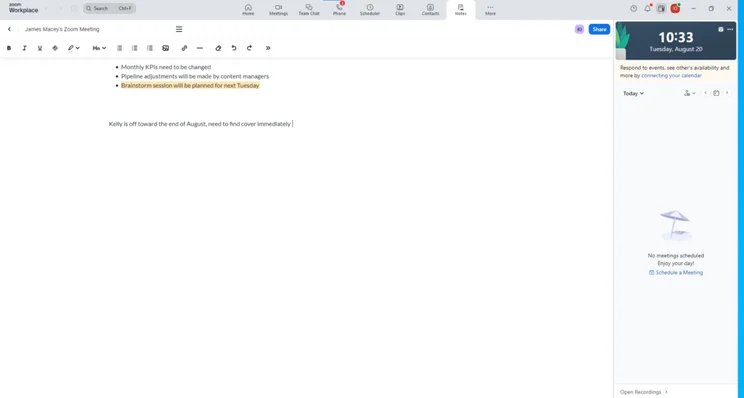
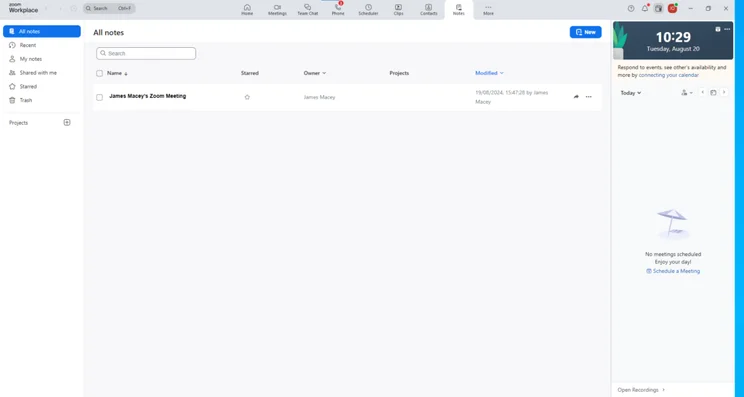
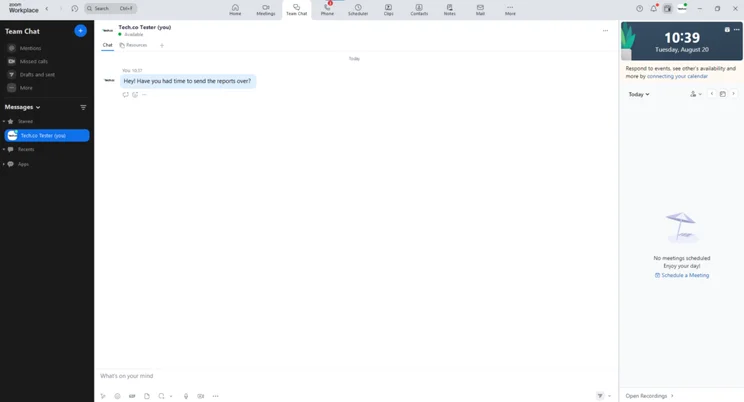
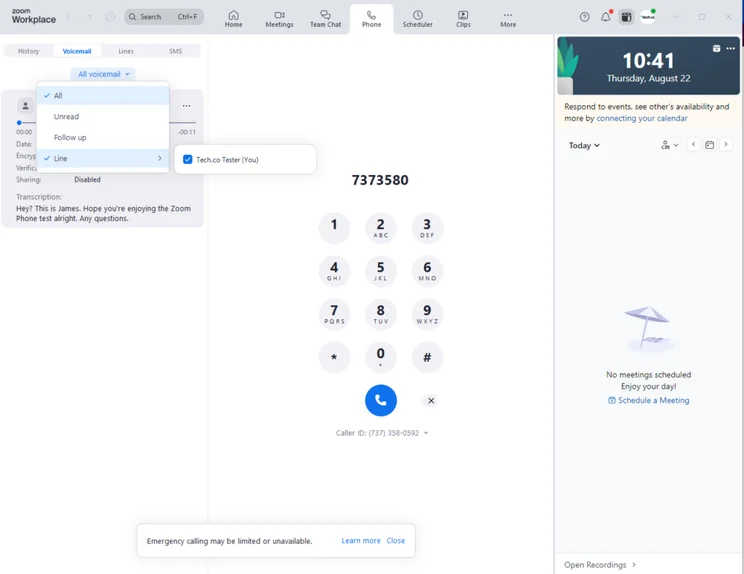
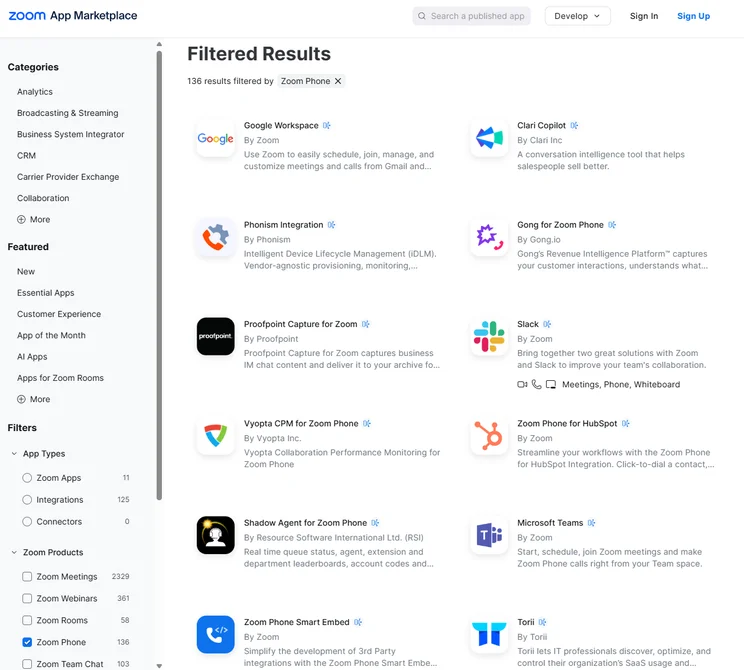
Zoom Phone is the best hotel telephone system, because it offers a huge selection of call management features like virtual receptionist, provides vital training features like call monitoring, and is compatible with a wide range of desk phone brands.
Zoom Phone also provides access to AI features, like Companion, which is an AI chatbot that can provide assistance throughout the platform, or ZoomMate, an agentic tool for automating business processes.
Zoom Phone

In Short
-
Pros
- Very low starting price, ideal for smaller businesses
- Excellent for managing high numbers of incoming calls (spam prevention, hold music, etc.)
- Top tier security protocol with abundance of compliance certificates
-
Cons
- Limited number of CRM and helpdesk integrations
- No email support available and you don’t get much help with onboarding
- Insufficient analytics tools with a lack of detail in reporting
Pricing
-
 US & CA Metered: $10.50/user/month
-
US & CA Unlimited: $16/user/month
-
 Pro Plus: $20.50/user/month
-
Business Plus: $24.50/user/month
Images
Zoom Phone key takeaways
- Useful AI features: Zoom offers plenty of call management features, including AI tools like Companion, a built-in, generative AI assistant, and ZoomMate, the agentic AI system.
- Robust training features: Zoom is well equipped to deal with the high staff turnover at hotels with tailored onboarding features, including call barge and whisper.
- Strong security protocols: Zoom encrypts all calls with end-to-end encryption (E2EE), processes all voicemail records securely in Zoom’s cloud, and automatically identifies irregular patterns to help detect fraudulent activity.
- Limited software integrations: Zoom doesn’t integrate with many customer relationship management (CRM), helpdesk, and property management systems (PMS).
- Missing in-room features: Zoom is missing some of the key in-room phone features like auto check-in and check-out, providing a critical barrier for managers looking to automate these daily processes.
I’d recommend Zoom US & CA Unlimited to smaller hotels like guesthouses, motels, and boutique hotels that are dealing with a high volume of calls, because it has the right amount of features to manage increasing demand and relieve pressure from staff, while offering a budget-friendly entry price.

2. Dialpad Connect Standard – Best for Hotels Wanting to Save Time with AI
- Price from: $15 per user, per month
- Compatible with: Polycom, Yealink, Cisco, Mitel
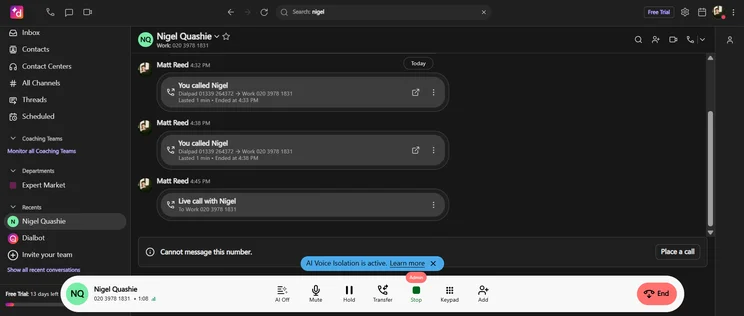
Dialpad Connect’s Standard plan, thanks to AI features such as real-time call transcriptions targeted towards enhancing productivity, is a great system for hotels looking to free-up staff by letting AI carry out its day-to-day operations.
These AI features help managers streamline their hotel’s ongoings, and enables smaller hotels to keep up with a busy service.
Dialpad Connect

In Short
-
Pros
- Excellent, comprehensive suite of features
- Great array of alternative communication channels
- Excellent security
-
Cons
- Slim range of software integrations with CRM, helpdesk or PMS
- Lacks some training tools
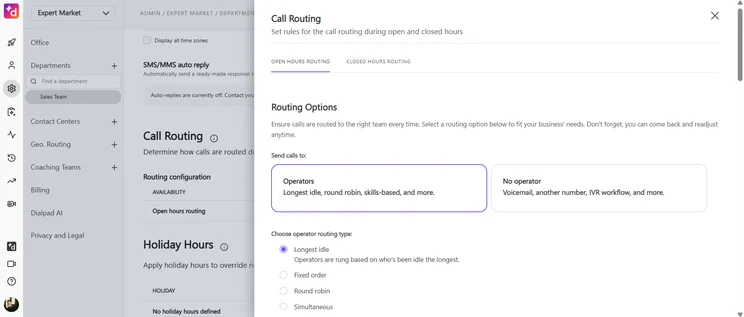
- No call queue functionality
Pricing
-
Standard: $15/user/month
-
Pro: $25/user/month
-
Enterprise: Custom
Images
Dialpad key takeaways
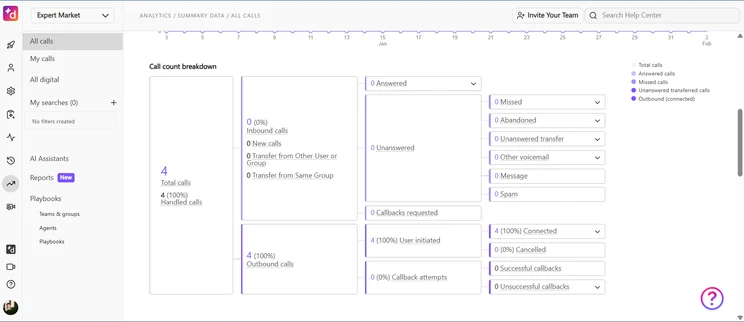
- Industry-leading AI features: Our researchers noted that Dialpad Connect is ahead of the competition when it comes to AI, offering tools like real-time call transcriptions and summaries, AI scorecards that automatically evaluate calls against predefined criteria, and a playbook feature that provides sales reps with customizable scripts.
- Flexible domestic call limits: Dialpad provides a solution for hotels that manage high call volumes by providing unlimited domestic calls, ensuring that businesses don’t rack up additional costs when dealing with demand.
- Time-saving tools: Dialpad contains features that will directly save time, including the interactive voice response (IVR) self-service system, that can cover requests such as room service or booking enquiries.
- No training features: Dialpad does present a barrier if your hotel is frequently onboarding or rotating staff, particularly if the staff is new to using phone systems. The platform doesn’t include training features such as call barge or whisper.
- Lack of software integrations: Dialpad offers a slim range of software integrations, with no CRM, helpdesk, or PMS software integrations available.
Dialpad Connect Standard’s vast range of AI features makes it suited to smaller hotels that want to take advantage of time-saving features, particularly if they are dealing with a small team of staff. Overall, Dialpad will free up staff to conduct more specific, targeted duties as it handles day-to-day burdens like transcribing calls.
Plus, smaller lodgings such as motels and B&Bs should take advantage of Dialpad’s budget entry-level price, especially since coupled with its AI tools, the system can save both time and money simultaneously.
3. Net2Phone Essentials – Best for Hotels Making International Calls
- Price from: $19.99 per user, per month
- Compatible with: Poly, Yealink, Cisco, Mitel
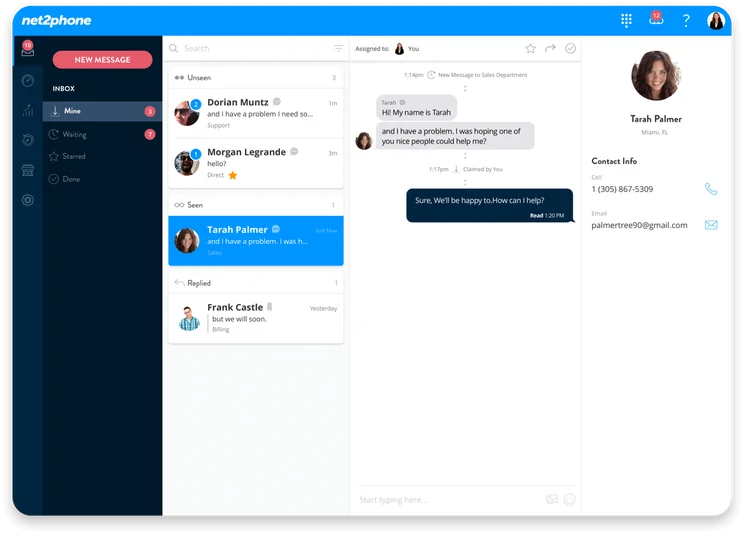
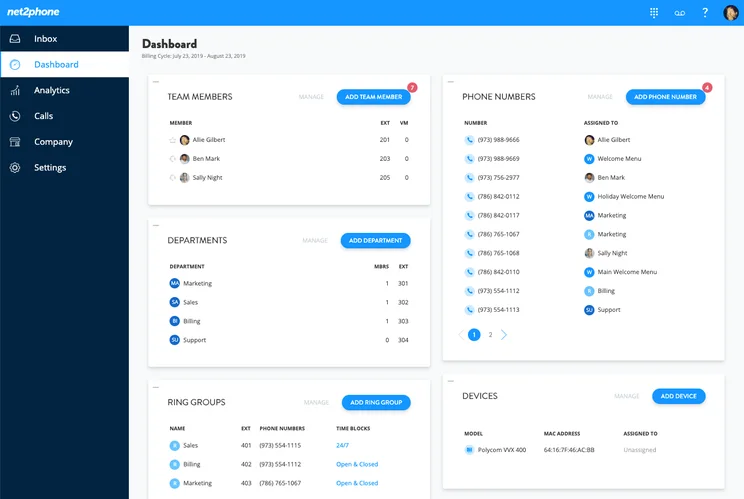
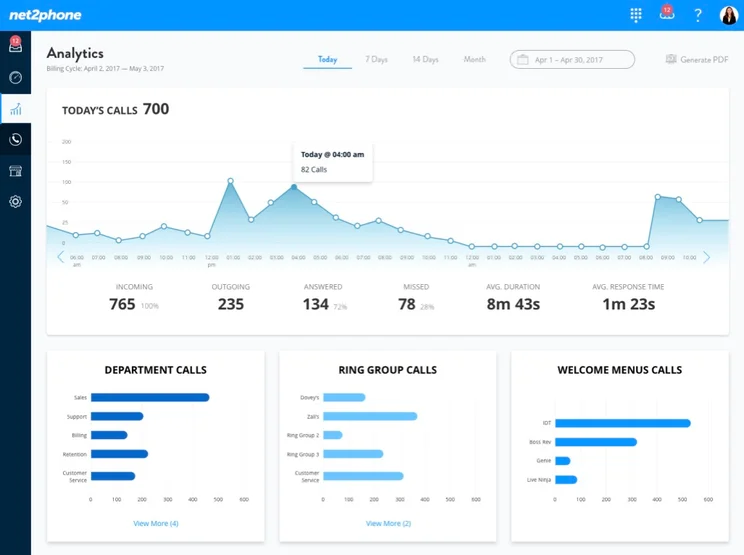
In our research, we found that Net2Phone’s Essentials plan offers a vast range of tools tailored towards hotels that manage plenty of calls overseas, including free desk phones and unlimited domestic and international calling to over 40 countries.
Prices for international calls can be steep, and so Net2Phone provides an essential money-saving tool for hotels to maintain their international clientele.
net2phone

In Short
-
Pros
- Excellent call management features
- Video conferencing platform built-in for team communication
- Plenty of AI features to save time and improve productivity
-
Cons
- Video conferencing and AI features very limited in Essentials plan
- Toll-free and international numbers cost extra in all plans
- Training features are highly limited
Pricing
-
Essentials: From $19.99/user/month
-
Professional: From $24.99/user/month
-
Ultimate: From $29.99/user/month
Images
Net2Phone key takeaways
- International calling features: Net2Phone is ideal for frequent international callers, offering unlimited domestic and international calls to over 40 countries, as well as international number porting capabilities.
- Customizable IVR menus: Net2Phone includes customizable IVR menus that allow guests to seamlessly navigate reservation options, meaning they can do so efficiently and without the supervision of a staff member.
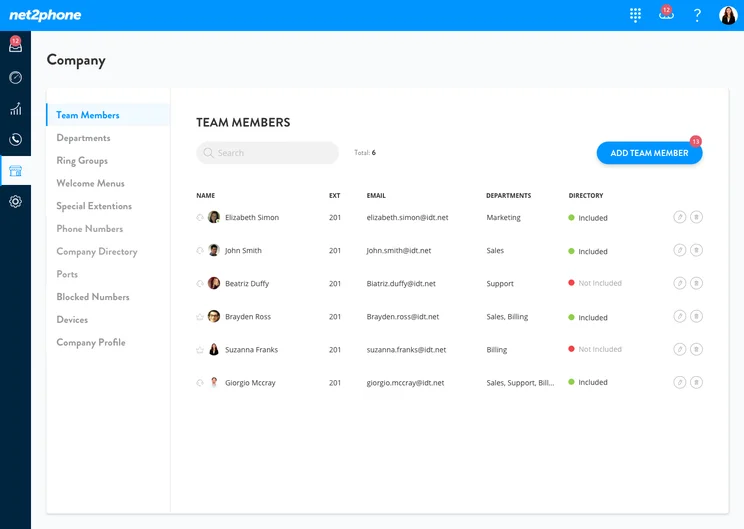
- Multi-location support: Net2Phone offers multi-location support, which centralizes communications to an admin portal and lets staff make free calls to different branches.
- Strong integrations: Net2Phone has compatibility with many different property management platforms, which is beneficial for hotels looking to give guests the customized experience they want.
- Limited training features: Net2Phone doesn’t offer a dedicated performance dashboard to help managers track progress over time, but it does have basic call analytics.
- Limited call barge features: Net2Phone has limited call barge features, making it hard for managers to join ongoing calls and provide assistance in real time.
According to our research, I’d recommend Net2Phone Essentials for larger hotels, particularly if they have multiple branches in different countries or an international customer base. This is because of the provider’s multi-location support tools and unlimited cap on international calls.
While some smaller hotels might benefit from Net2Phone, prices can get pretty steep for top-tier features like AI call transcription. For managers who want to take advantage of these, I’d suggest an option like Dialpad Connect or Zoom Regional Unlimited.
4. RingCentral RingEX – Best for Hotels Wanting a No-Fuss Setup
- Price from: $20 per user, per month
- Compatible with: Poly, Mitel, Unify, Yealink, Snom
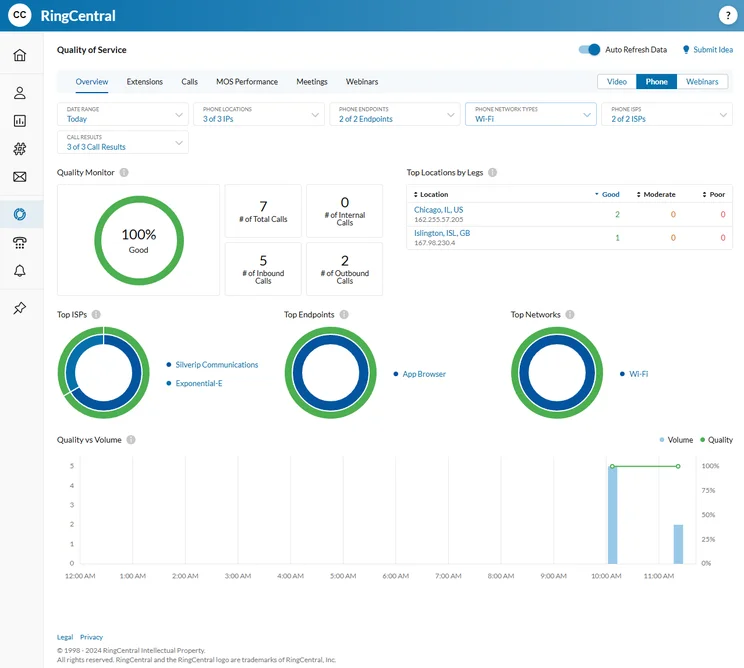
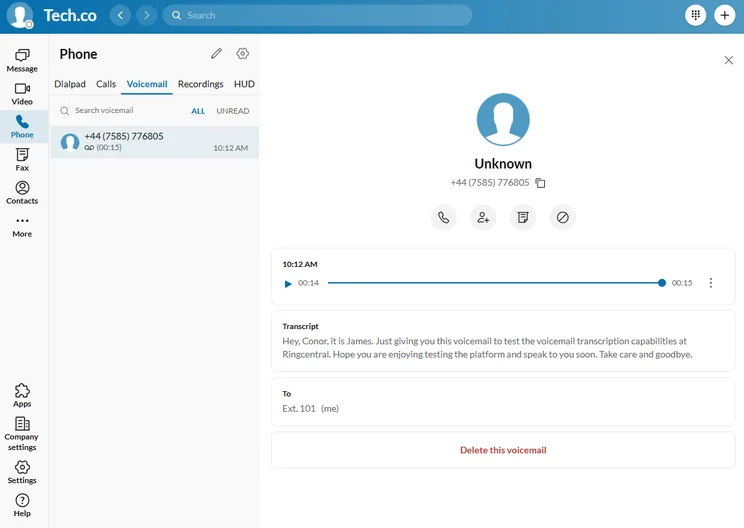
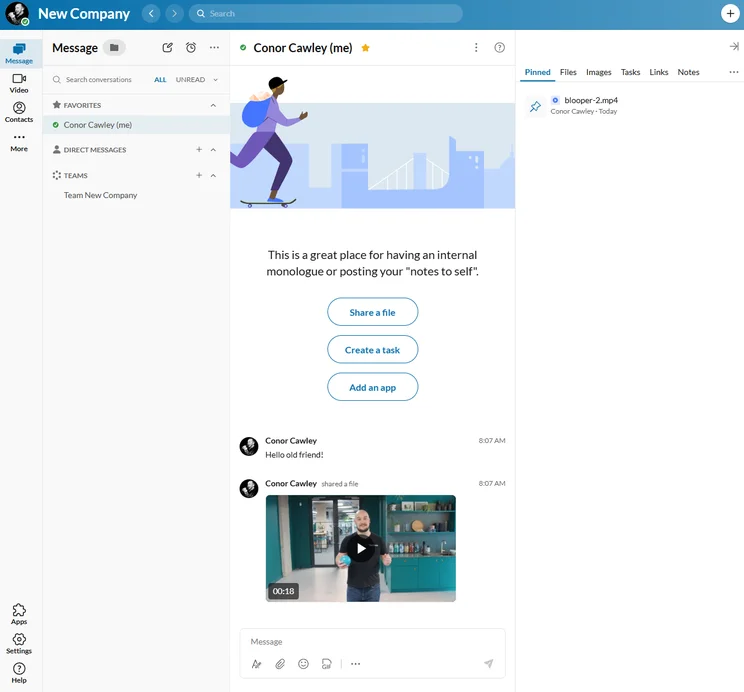
RingCentral RingEX is ideal for hotels that want to be able to monitor all the core software they use from a single location, because it has the largest library of third-party integrations we researched.
Hotel managers who want to keep a regular eye on all aspects of their business can ensure processes are always running smoothly, and RingCentral is a great option for creating a centralized location of operations.
RingCentral RingEX

In Short
-
Pros
- Flexible range of pricing plans, with easy scaling for all businesses
- Largest library of third-party integrations across our research
- All-in-one hub for internal and external communication
-
Cons
- No automatic downloads for video meeting transcripts
- High starting price makes it prohibitive for smaller businesses
- CRM and helpdesk integrations reserved for more expensive plans
Pricing
-
Core plan: $20/user/month
-
Advanced plan: $25/user/month
-
AI Customer Engagement Bundle with AIR: custom pricing
-
AI Customer Engagement Bundle with AIR and ACE: custom pricing
Images
RingCentral key takeaways
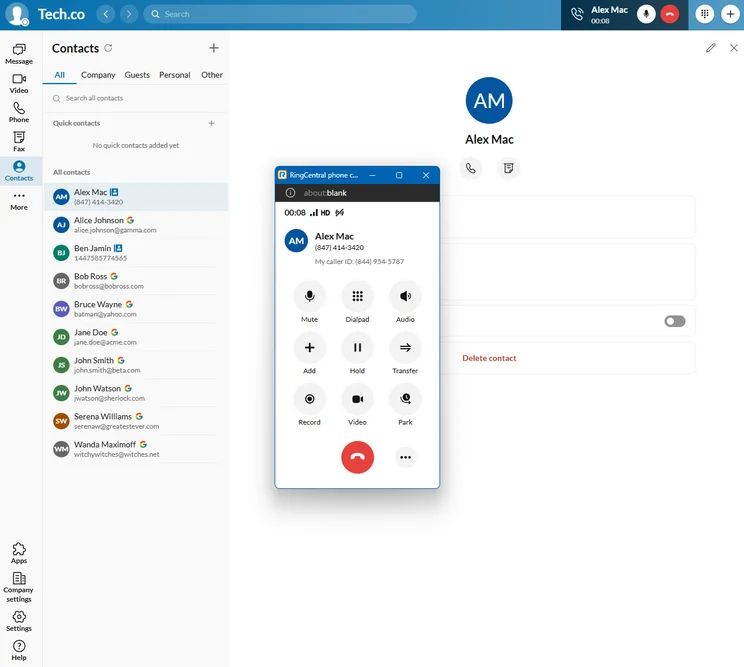
- Massive app library: RingCentral offers the biggest selection of third-party integrations out of all the providers we researched. The provider integrates with Gmail, Salesforce, and PMS platforms such as Buildium and DoorLoop.
- Robust in-room calling features: RingCentral allows hotels to add personalized greetings and call options, and guests can make local, long-distance, and internal calls. Plus, an in-room AI assistant makes it easy to get information 24/7 for guests.
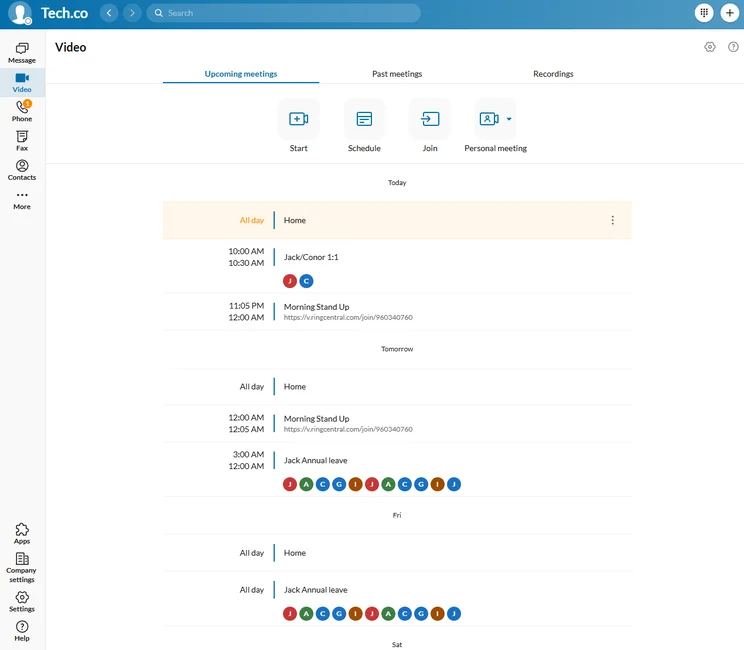
- Multi-location support: RingCentral is able to support hotels with multiple locations with centralized management for multiple properties under one account, and customize call handling based on your specific needs.
- Some features only available in higher tiers: RingCentral keeps some advanced features in its higher paid plans, which can be found in the other providers that we researched.
- Few PMS tools available: RingCentral doesn’t integrate with a large amount of PMS systems focused on hospitality.
RingCentral RingEX’s large amount of integration options makes it well suited to hotels wanting to keep an eye on all elements of its operations, in an efficient manner.
I’d also recommend RingCentral to larger hotels and those with seasonal demands, because of the flexible approach it takes towards communication tools and user commitments.
5. Nextiva Core – Best for Hotels Prioritizing Customer Communications
- Price from: $15 per user, per month
- Compatible with: Polycom, Cisco, Yealink
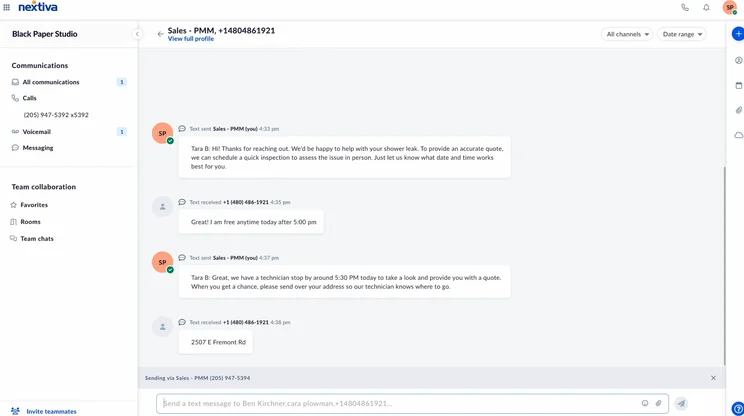
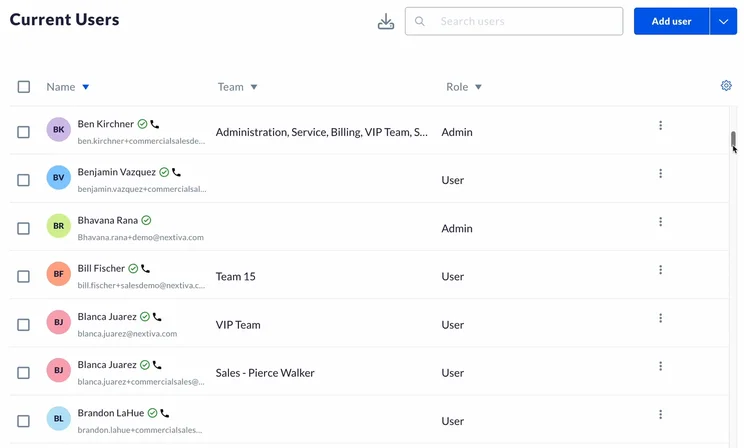
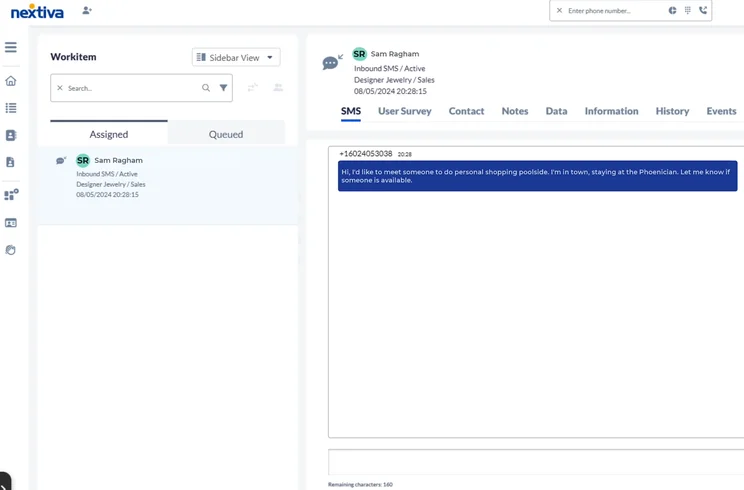
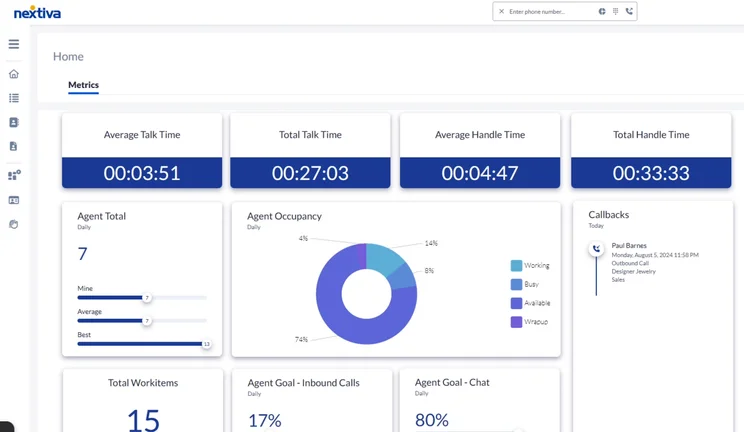
Nextiva’s Core plan lends itself well to hotels that want to maximize and streamline communications with customers, because of its useful omnichannel communication options that combine customer interactions across voice, email, SMS, chat, and social media into a single interface.
In 2026, customers are increasingly turning to hospitality businesses to create a personalized experience, and so a provider like Nextiva is well-positioned to ensure hotels can understand directly what their guests need.
Nextiva

In Short
-
Pros
- Unlimited users on all plans, ideal for large businesses on a budget
- Easy to use and simple set up, which makes it good for beginners
- 24/7 live support + excellent additional support options
- Lots of collaboration features like a team messenger, which is great for hybrid/remote teams
-
Cons
- Few management features, which means it isn’t very scalable
- Poor options for managing sensitive customer info
- Few integrations on the first paid plan, so you won’t be able to sync it with your CRM
Pricing
-
Core: $15/user/month
-
Engage: $25/user/month
-
Scale: $75/user/month
Images
Nextiva key takeaways
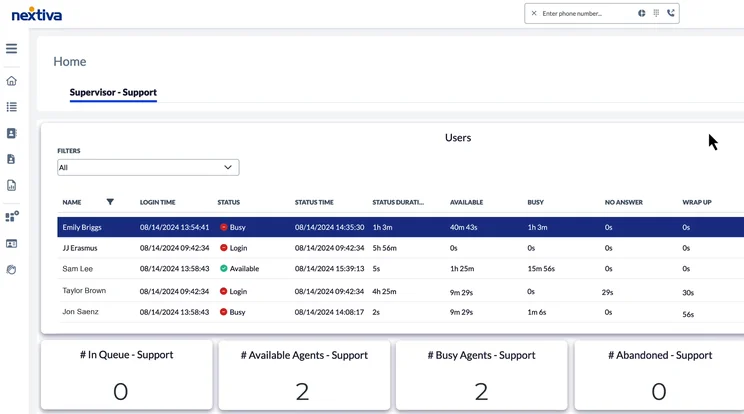
- Omnichannel communication tools: Nextiva effectively allows hotels to communicate with customers on multiple levels, including voice, email, SMS, chat, and social media, all through a single interface.
- AI-powered virtual assistant: Nextiva’s intelligent virtual agent (IVA) uses generative AI to provide personalized assistance to guests, reducing the need for staff to deal with several requests.
- Solid in-room features: Nextiva provides several in-room calling features such as voicemail-to-email functionality, where voicemail on a guest’s phone can be turned into an audio transcript that is available to email for a quick response from staff.
- No PMS software integrations: Our research found that Nextiva doesn’t integrate with any PMS software, greatly reducing a hotel’s ability to automate and streamline daily operations.
- Lacking some call management features: Nextiva doesn’t offer a strong suite of call management features, and some features such as call monitoring and analytics are only available as paid add-ons.
Nextiva’s Core plan is a great option for hotels that want to communicate directly and effectively with customers, thanks to its omnichannel communications options where customers can reach out via email, SMS, social media, and more.
I’d also recommend Nextiva Core to managers who want to make the most of solid customer support options like 24/7 live support and email support, particularly if they want to get the best out of their system.
What Are the Benefits of a Hotel Telephone System?
Hotel VoIP systems can offer improved efficiency, lower VoIP costs, and easy expansion for businesses.
They ultimately provide more features compared to a straightforward Private Branch Exchange (PBX) system, including clearer communication lines and integrations with PMS services.
Here are some of the top advantages of VoIP systems for hotels:
- Cost savings: VoIP systems cost much less in terms of setup and maintenance, compared to traditional wired solutions. By paying a low monthly fee, you can avoid all of the wiring and logistics involved, as well as the extra money needed for upkeep and maintenance. Plus, VoIP systems can work with traditional desk phones and softphones (computers and mobile devices), meaning you won’t have to pay for additional hardware when the system is set up, saving your hotel overall installation costs.
- Improved day-to-day efficiency: As costs tighten and labor difficulties sweep the hotel industry, VoIP systems can provide a relief for a small team of staff by automating plenty of day-to-day operations, such as through integrations with PMS software. Similarly, add-ons like CRM and business management software allow staff to manage data, files, booking, and customer information easily – everything will be done automatically.
- Scalability: VoIP makes it easy for hotels to add or remove lines and extensions as they need, because there is no need for additional wiring. This will make it easy for your hotel to expand in the future.
- Convenience: VoIP systems have remote management capabilities, meaning that anyone with an internet connection can monitor a hotel staff’s ongoings, with the correct security clearance, of course.
Looking for an accompanying POS system for your hotel? Check out our dedicated guide on the best hotel POS system.
How Should Hotels Choose the Right Phone System?
Hotel managers should ask themselves what their budget for phone systems is, the kind of features they’d like, the size of their hotel, and the needs of their staff, before investing.
Below I expand on the questions above, and offer some more considerations for managers making this choice.
You’ll need to know how much you want to spend on a hotel telephone system, with the average cost of a provider usually ranging between $15-$80 per user, per month. Likewise, as the system takes a ‘per user, per month’ approach, you’ll have to take the size of your team into account when figuring out costs.
Different providers offer different features. If your hotel deals with a lot of international customers, for example, you might want to opt for a system like Net2Phone, because it offers features like unlimited international calls. Ironing out exactly what your hotel will need is vital.
I’d recommend definitely opting for a system with automation features – no matter your needs. 39% of property managers say they spend more than 20 hours a month handling maintenance requests, suggesting poor communication between systems.
Overall, automated features will greatly save staff time because daily operations, like table reservations, can be completed automatically and without assistance.
Managers with plans for growth should select a telephone system that is capable of changing easily as demand for your business expands. As a general rule of thumb, I’d recommend prioritizing providers with scalable packages and useful add-on options.
Managers should consult with staff before settling on any kind of new technology, especially since they will be using it as much as you will. It’s important to consider whether staff will also need any training on a new phone system, and whether this is included with the provider, or whether it will need to be given elsewhere.
Our research found that sometimes suppliers offer free training, so it’s always worth asking at installation.
If you’re a manager who is already using a traditional business phone system, before upgrading, I’d recommend checking with your current provider to ensure it can handle the switch.
This includes factors such as checking your porting number is easy, and that a comprehensive action plan is made before you start unplugging phones.
Some hotels may need a fully functioning telephone system with a range of accessories integrated into the system, such as business VoIP headsets or voicemail. Others may not need as much advanced functionality.
Likewise, in terms of hardware, our research team does recommend that hotels use softphone apps. But, if you’re unable to forego some flexibility, hard phones allow for slightly better call quality. Our top picks for hotels, based on our research, are the Polycom VVX 601 and Cisco 7941.
Some hotels might benefit from having more than one telephone line, particularly if they have multiple elements to their business. For example, for hotels with restaurants, managers might want to consider a second line dedicated to bookings and reservations.
In general, I’d recommend all hotels consider a multi-line option, as it offers separate channels for reservations, payments, and customer concerns. This makes it easier for your customers to get to who they need to speak to quicker, and improves the convenience of their stay.
Looking for more key insights into the hospitality sector? Get business tips, news, and more with the Mint Pillow newsletter.
Methodology: How We Research Phone Systems
We take our hands-on testing and impartial analysis seriously, so you can have complete confidence that we’re giving you the clearest, most useful recommendations.
With this framework we cover everything, from internal communication tools and security options to niche training features, and it ensures we can accurately assess each product’s value for its price and suitability for different types of businesses.
Our main research categories for VoIP phone systems are:
- Call management features (25%): The presence and quality of call handling features, including basic features such as call forwarding and voicemail, as well as more advanced features like auto-attendant and interactive voice response (IVR).
- Communication channels (15%): Features designed to support communication other than calling, including integrations with websites and social media platforms.
- Hardware integrations (5%): The desk phone and other hardware options that are compatible with the hotel phone system.
- Software integrations (10%): The third party apps and other platforms that can integrate with the hotel phone system.
- Training features (10%): The presence and quality of features designed to support onboarding and training, like call barge, call whisper, and performance dashboards.
- Customer support (5%): The assistance and resources provided by the VoIP service provider to customers, including online resources, knowledge bases, and access to customer support representatives and AI chatbots.
- Security options (5%): The measures and features implemented by the VoIP service to ensure the confidentiality, integrity, and protection of voice communications and data.
- Pricing factors (25%): The pricing structure associated with the VoIP service, including factors such as monthly subscription fees, domestic and international call rates, setup fees, hardware costs, and extra costs, like add-on features or services.
For hotels, we focused our research on some specific areas that pertain to the industry, including call management features, training, CRM integration, and hardware compatibility.
Learn more about our research testing process.
Our research shows that Zoom’s Regional Unlimited plan is the best hotel telephone system in 2026, because it offers critical time-saving features such as built-in AI-powered call and voicemail transcriptions, which will free up time for staff and improve their efficiency. Likewise, it only costs $16 per user, per month to get started.
As the industry struggles with rising costs and labor difficulties, hotels should gear towards choosing a system that won’t break the bank and investing in features that can automate processes and free up staff from daily operations.
If you’re still on the fence about which system would work best for you, you can check out our handy comparison tool, where you’ll receive tailored, fuss-free quotes from the best VoIP providers.
FAQs
Hotel phone systems can operate either via a Private Branch Exchange (PBX) system, or using more modern Voice Over Internet Protocol (VoIP) technology, that allows communication via an internet connection.
Traditional PBX systems act as a central hub for incoming and outgoing calls, and is able to manage call routing, voicemail, and call forwarding, among other elements.
However, our researchers recommend that hotels opt for VoIP technology because of the advanced functionality these systems offer, such as voicemail-to-email, call recording, and automated check-in/check-out.
Plus, these systems often integrate with Property Management Systems (PMS) that offer features such as automated billing, and can therefore ease the burden of daily operations on pressured hotel staff.
VoIP providers offer a range of integrations with different PMS systems, and many of these will be built-in to the VoIP system and require just a one-click redirection or simple configuration for users to gain access.
Older or specialized PMS systems may sometimes require an Application Programming Interface (API) key or token to create a custom connection between the two systems, but this requires some technical knowledge and setup.
Connecting your VoIP provider is highly beneficial for businesses that want to automate tasks such as call logging and caller identification, freeing up staff from having to manually carry out these tasks.
No, you won’t need to replace your existing analog phones when switching to a VoIP system, as VoIP software will typically connect to them through an Analog Telephone Adapter (ATA) or a VoIP adapter. The adapter acts as a bridge between the two technologies, and will allow digital calls to come through the analog phone.
Instead of a single adapter, I’d recommend larger hotels opt for a VoIP Gateway with more ports. This will allow you to connect more phones without having to make drastic purchases on new ones.
As of 2020, Kari’s Law in the US states that hotel phone systems must allow direct 911 dialing without an access code, and provide automatic, on-site alerts to security when 911 is called. These alerts can be via email, text, or SMS, for example.
Likewise, the system should have the capacity to send precise location data to emergency services, relating to the specific room number, floor, or suite. This allows emergencies to be handled swiftly.
Hotel managers should make sure that these requirements are met when considering a phone system, and you can usually find out about a system’s compliance from the provider’s website.
If you click on, sign up to a service through, or make a purchase through the links on our site, or use our quotes tool to receive custom pricing for your business needs, we may earn a referral fee from the supplier(s) of the technology you’re interested in. This helps Tech.co to provide free information and reviews, and carries no additional cost to you. Most importantly, it doesn’t affect our editorial impartiality. Ratings and rankings on Tech.co cannot be bought. Our reviews are based on objective research analysis. Rare exceptions to this will be marked clearly as a ‘sponsored’ table column, or explained by a full advertising disclosure on the page, in place of this one. Click to return to top of page


