

We may receive a commission from our partners if you click on a link to review or purchase a product or service. Click to Learn More
Before you outsource web design, you’ll need to consider what the process might look like, how much it would cost, and finally, if you can afford to develop your site in-house. By addressing these questions ahead of time, you can determine if outsourcing really is the best course of action for your business.
Compared to the high costs of recruiting an in-house web development team and the time-consuming process of taking on the task yourself, outsourcing web design to a web design company or a freelancer can be an attractive and cost-effective solution. However, it’s not a decision businesses should take lightly.
To help you come to a conclusion, this article breaks down how outsourcing works, what options are available, its benefits, and perhaps most importantly, how much the whole endeavor will cost you.
We also understand that pinning down prices for these services isn’t always easy. So if you’re looking for someone to handle your web design for you, you can use our completely free web design service price comparison tool to get accurate, obligation-free quotes today.
Read on to find out more about outsourcing web design, or skip to specific sections using our links below.

Having a well designed website pays
Fill in our quick form to find the best solution for your business.
How to Outsource Web Design
In practice, web design outsourcing can happen in a handful of different ways. First, you might opt for a U.S. or global organization designed specifically for the task.
Hiring U.S.-based freelancers, either through a third-party site or through word of mouth, is another common option. You might also reach out to freelancers or organizations in other locations, including India, the Philippines, or European countries, and match prices to see who can offer the best value.
Here’s how to go about the project in the most effective way possible:
Step 1: Know the scope of your project
Are you starting a website from scratch? Doing essential updates? Giving it a facelift? Be completely ready to describe the project and what you’re hoping to achieve. This can help you lay out your expectations when reaching out to designers, or simply when setting an initial meeting.
And do your research beforehand. Whether you’re looking to build a landing page or a dynamic eCommerce site, provide your prospective designers with a detailed brief so there’s no room for misunderstanding.
Step 2: Know the industry’s average prices
Web design prices come in a wide range, so it’s important to know the typical prices charged for high-quality web design. If you go in looking for the cheapest price possible, you’ll more than likely wind up with the cheapest-looking website. Good luck boosting your company’s revenue with that approach.
The costs for web design tend to hinge on three different factors, which will affect how much work a designer will need to log for any given project:
- Design complexity
- Site functionality
- Total number of pages on the website
If you’re developing a tiny, five-page website, a decent ballpark number would likely remain under $500. If you’re producing a website with functionality that supports detailed ecommerce options, prices might rise to $3,000.
Where you choose to outsource from can have a massive impact on price too, with many countries in Europe and South-East Asia offering web design services for excellent value for money.
Step 3: Collect and compare quotes
Since the price of a web design project can vary depending on the specific project, asking for a personalized quote is the best way to get an accurate price.
You’ll want to collect multiple quotes in order to figure out which web designer understands your needs and offers the most cost-effective deal. While that might sound time-consuming, it doesn’t have to be. In fact, by using our handy quote comparison tool you can get quotes that are tailored for the scope of your project all in one go, saving you hours of researching and comparing offers.

Step 4: Communicate
Once you’ve picked out the best web designer, you should be prepared to answer their questions, or ask your own, while they’re working on the process. You’ll likely want to establish check-ins, so that you can be sure that the project is developing in line with your expectations.
It’s important to hold firm to the principles of what you’re after with the project, but don’t be afraid to let the designer make changes or lead with suggestions.
It’s their area of expertise, so they might have insight on the best ways to create a useful website for your business.
Step 5: Stay in touch
Finding a great web design firm is rarely just a one-time deal. If you need an update or a new template in the future, you can return to outsource further work from the designer who helped you originally.
It all comes down to knowing which organizations or people you can trust to get the job done. Once you take the time to research an option and build a relationship, you’ll have a trustworthy web designer to return to in the future.
If you develop your website with a designer you’re not entirely happy with, then choose to update the site via a different firm or freelancer, you may encounter additional costs as they undo or redo the work you were dissatisfied with.
If your business doesn’t currently have a website and you’re looking to build one from scratch, you would benefit from the help of a web developer. Alternatively, if you want to improve the look, layout or useability of your pre-existing website, your business is in need of a web designer.
The Benefits of Outsourcing Web Design: ROI
The main perk of outsourcing web design is pretty clear – it can provide businesses with a great return on their investment (ROI). Compared to the costs associated with hiring, training managing an in-house design team, when you outsource your web development you only pay for the time used. In fact, research from Deloitte reveals that 59% of businesses outsource for this very reason.
What’s more, if you hire web developers from overseas, costs are likely to be lower still. Findings from the Accelerance 2022 survey report revealed that, when broken down by hours, the salaries of overseas developers are roughly two-thirds of in-house U.S. professionals. These price differences can make a massive impact on smaller businesses building a web presence from scratch.
Despite this, if you’re a smaller business or sole trader with less exhaustive web development needs, it may be more cost-effective still to use a website builder. Small business website builders come with multiple templates, are easy to use, and are often much cheaper than hiring out service professionals.
While you won’t be able to create and tweak any feature you can imagine, taking the D.I.Y route doesn’t need to impact the quality of your website, as there are thousands of professional templates and app options which will likely suit your needs. Prominent website builders like Wix let you build professional websites that have the potential to be highly profitable.
Therefore, unless you’re looking to build a large, complex website and will benefit from the help of skilled professionals, using a website builder will generally provide you with an even better return on your investment.
Who will benefit from outsourcing web design and who won’t?
Who will benefit from outsourcing?
- Businesses with slightly larger budgets
- Businesses who seek the services of skilled professionals
- Businesses in need of a fresh perspective
- Businesses with complex, or specific website needs
- Businesses with no experience
- Businesses who need results by a deadline
Who should use website builders?
- Smaller businesses or sole traders with limited budgets
- Growing businesses that are looking to scale back costs
- Businesses that have already secured a domain
- Businesses with more simple website needs
- Businesses with less urgent time pressures
- Businesses that would also benefit from customer relationship management (CRM) tools
Learn more in our guide to the three ways to make a website.
How Much Does Outsourcing Web Design And Development Cost?
NB. The figures outlined in this table represent regional averages and are based on research from QubitLabs. Prices will vary from country to country.
Is It Cost-Effective to Outsource Web Development?
Just because you can outsource web development, doesn’t always mean it’s right for everyone. If you have a trusted web designer on staff, or if your business uses an in-house team, they should be your first resort. However, a couple of different factors make outsourcing an attractive solution to a web design project.
The first reason is perhaps most appealing to a small business with an eye on its bottom line. Thanks to the international market, your dollar will go further when working with many overseas companies or agencies. Furthermore, since you’ll have access to a global marketplace, you’ll have a larger pool of workers, and a greater quality of work should rise to the surface as a result.
A disadvantage to consider: Time differences. A simple back-and-forth transaction might last an entire working day, as you’ll need to wake up and check an email or message left for you at three in the morning in your own time zone. By the time the designer is attending to your feedback, you may have clocked off for the day.
Still, if you can handle the time differences, outsourcing web design overseas is the most cost-effective solution for business owners who don’t have “web development” in their toolkit. But there are plenty of good value web design companies you can turn to in the U.S. as well, so don’t rule out looking closer to home.
Check out our article breaking down typical web design costs for a more detailed look at the typical prices and projects.
Cost of Building A Website Yourself

Building a website on your own is surprisingly easy these days thanks to sophisticated, easy-to-use tools called website builders.
A typical small business site costs from $6 per month to $25 per month, depending on the scale of what you need
Remember that the first step in outsourcing web design is to determine the scale of your website. Perhaps you genuinely don’t need any fancy functions or standout design elements, in which case a typical third-party website builder can do the job.
With most website builder tools, you’ll be given a selection of templates to use, and you’ll be able to further customize them within an easy-to-understand drag-and-drop website editor.
The format can feel cookie-cutter, but the results can still be boutique. That’s thanks to some beautiful website templates that you can use as a starting point, before customizing to your heart’s content.
If your business just needs a simple online base that lets your clients locate you, find out what you do, and get in touch, then building your own website is a serviceable solution. It’s cost-effective, too, with a typical small business site costing from $6 per month to $25 per month, depending on the scale of what you need.
Read our guide to the best website builders for business.
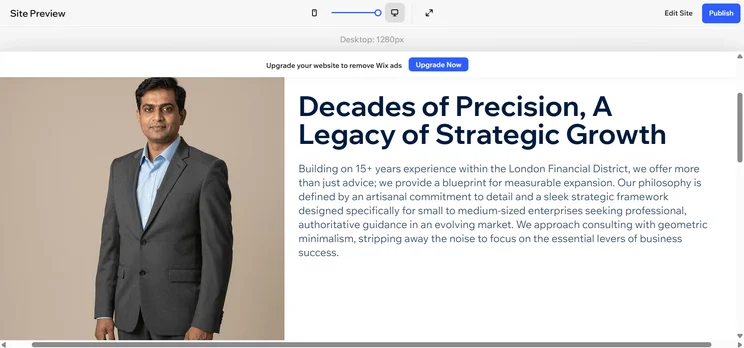
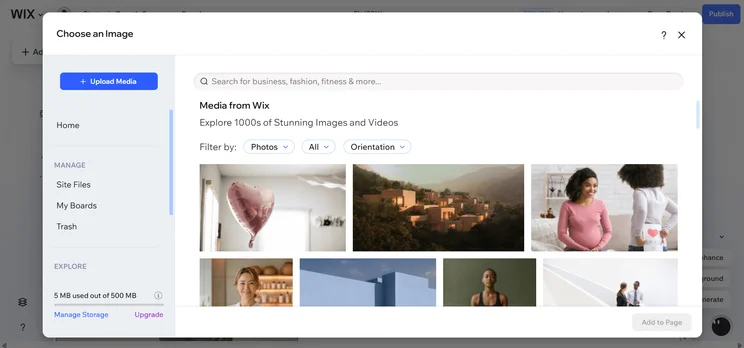
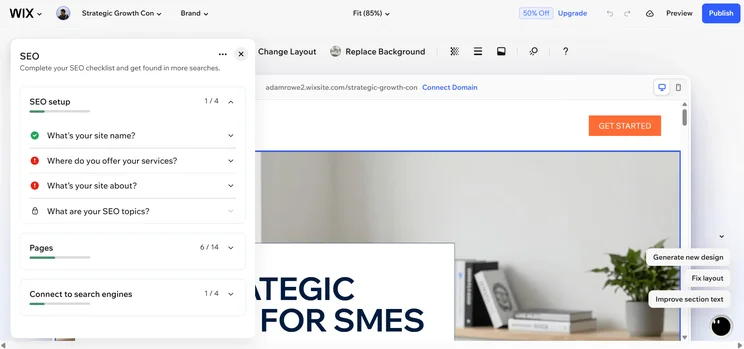
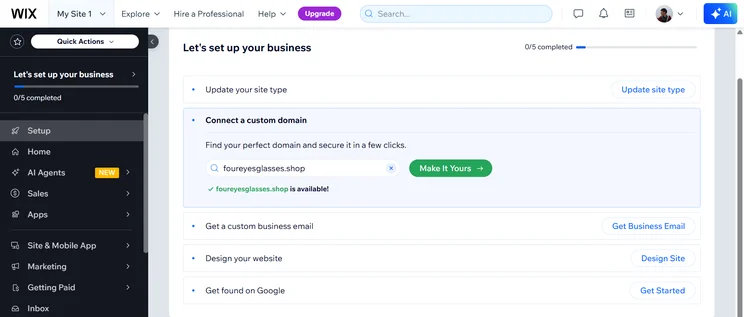
Here’s an example of the pros and cons to expect from one of the most popular website builders out there, Wix. It’s the top-rated website builder in our thorough testing:

Looking for an affordable solution?
Tell us your web design needs and recieve bespoke quotes in minutes.
Wix

In Short
-
Pros
- Unrivaled selection of website features across design, sales, and support
- AI features can create a site in 60 seconds
- Quality free forever plan available
-
Cons
- No template switching once published
- Number of features can be overwhelming for some beginners
- Steep price increase for scaling businesses
Pricing
-
 Light: $17/month
-
Core: $29/month
-
Business: $39/month
-
Business Elite: $159/month
-
10% off any plan with code TAKE10
-
Free plan
Images
Should You Outsource Your Web Design?
If you have read through this entire guide, you should hopefully know by now whether outsourcing web design is right for you.
Have a web developer on staff? You likely shouldn’t outsource. Just need a simple, no-nonsense website you can have a go at yourself? Look into the best website builders.
But, if you don’t have an in-house web developer and need a boutique website, outsourcing will net you the best quality at the lowest cost.
And as a final reminder, the main steps for outsourcing web design are
- Research the best kind of designer for your purposes
- Collect accurate, tailored pricing quotes with our handy comparison tool (100% free to use)
- Communicate clearly during the project, and stay in touch afterwards – you just might develop a contact who’ll remain useful for years to come!
Compare Costs On Website Packages
Transparent pricing can be hard to find. Fill in our form to get free quotes in minutes!
If you click on, sign up to a service through, or make a purchase through the links on our site, or use our quotes tool to receive custom pricing for your business needs, we may earn a referral fee from the supplier(s) of the technology you’re interested in. This helps Tech.co to provide free information and reviews, and carries no additional cost to you. Most importantly, it doesn’t affect our editorial impartiality. Ratings and rankings on Tech.co cannot be bought. Our reviews are based on objective research analysis. Rare exceptions to this will be marked clearly as a ‘sponsored’ table column, or explained by a full advertising disclosure on the page, in place of this one. Click to return to top of page
Frequently Asked Questions
Outsourcing web design refers to when businesses hire an external service provider – like a design agency, company, or freelancer – to design or improve their website. By outsourcing these tasks to professionals, businesses can save money by not having to invest in an in-house team, or save time by not building the site themselves with a web builder or Content Management System (CMS).
If you run a medium-sized business and have a decent amount of capital to invest in your business, it makes sense for you to outsource your web design to a third party. If you’re a sole trader or small business, you may benefit more from using a website builder.
The cost of outsourcing web development varies on a number of factors. Outsourcing website building services in the U.S. can cost anywhere from $2,000 to $53,000+, depending on the size of the site. In various countries in Asia and Europe, this can cost significantly less. Very simple or small projects are more likely to be in the hundreds of dollars.


