
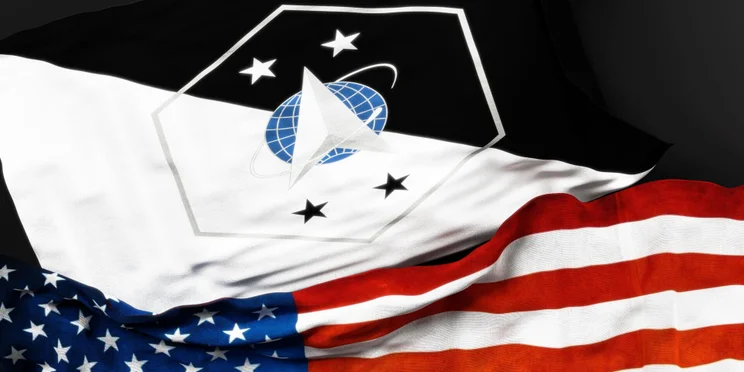
The US Space Force has temporarily banned its personnel from using certain generative artificial intelligence (AI) tools on government computers, due to concerns over the data security of ChatGPT and similar platforms.
As ChatGPT creator OpenAI comes under fire for its shady data collection practices, the Space Force is just the latest major organization to question its safety – with Apple, Samsung, and Verizon also banning its use among employees.
The Space Force was also quick to recognize AI’s strengths, however, and announced that “strategic pause” will come to an end as soon as they figure out how it can be used in a “responsible and strategic manner”.
AI Prohibition Goes Intergalactic
As the data collection practices of generative AI applications come under increasing scrutiny from the government and private organizations, the US Space Force has decided to stamp out their use altogether until they figure out how to use them safely.
This is according to a recently released memo that was sent to Space Force employees – known within the organization as ‘guardians’ – on September 29.

This just in! View the top business tech deals for 2026 👨💻
“A strategic pause on the use of Generative AI and Large Language Models within the U.S. Space Force has been implemented as we determine the best path forward to integrate these capabilities into Guardians’ roles and the USSF mission”, – Air Force spokesperson Tanya Downsworth
According to Lisa Costa, Space Force’s chief technology and innovation officer, the pause will only be temporary, and the military branch has created a generative AI task force with other Pentagon offices to decide how the technology can be used in a “responsible and strategic manner”.
Costa was also quick to point out AI benefits, explaining that despite these current security concerns, artificial intelligence “will undoubtedly revolutionize our workforce and enhance Guardian’s ability to operate at speed.”
The Space Force Isn’t the Only Organization Barring AI
While companies across the US have been quick to leverage AI to their advantage, a number of big names have banned its use outright until they figure out how to work with the technology securely.
Earlier this year, Apple banned OpenAI’s ChatGPT for all its workers, over concerns of the chatbot contributing to a potential data leak. Following this, South Korean tech manufacturer Samsung made a similar crackdown after an employee leaked confidential information on ChatGPT which resulted in a leak of a classified code.
But it’s not just organizations placing restrictions on generative AI. Several countries have decided to ban the AI tool ChatGPT flat out, including Russia, China, Iran, Cuba, and Italy.
From hallucinations and encoded biases to dubious data collection policies, it’s no surprise that powerful companies, military branches, and even governments are thinking twice before trusting the technology completely.
However, if the US Space Force’s account is anything to go by, once these concerns get ironed out generative AI will still take center stage in these organization’s strategies going forward.


