

The internet has won: The majority of US shoppers will be turning to their laptops or phones in order to do most of their gift-buying during the 2024 holiday season.
Specifically, 76% of these consumers say that they’ll do 50% or more of their shopping online. That’s a big shift from past decades, even if it’s not quite a shock, given the ever-increasing dominance of the online realm when it comes to remote work/life balance.
What hasn’t changed? Most people are still waiting until November before they start filling their shopping carts, whether physical or virtual. Plus, we’re seeing a bit of a revival for the power of listening to your friends — not Google — when getting recommendations on where to buy.
55% Will Start Shopping in November
The report, out earlier this month from management consulting firm Bain & Company, found that 55% of all US consumers will wait until November to start shopping for the season (another 19% won’t be shopping at all).
That stat is up a tad from last year, when 53% picked November as their shopping month, but it’s pretty stable.

This just in! View the top business tech deals for 2026 👨💻
The 76% of US consumers who are doing at least half of their holiday shopping over the internet is among the highest percentages when compared to other countries that the report checked in with: It matches the 76% of Germans who are will do the same, and it beats plenty of other countries, including the UK (73%), France (62%), and Australia (55%).
Gen Z Isn’t Turning to Google for Recommendations
One of the most interesting revelations from this new holiday shopping trends report? A generational shift in how buyers decide on what to get.
The youngest shopping generation, Gen Z, relies on recommendations from friends as their number one influence on where they shop. That’s the same as the oldest generation polled, Boomers. However, both Millennials and Gen Xers picked “Google or other search engines” as their top answer.
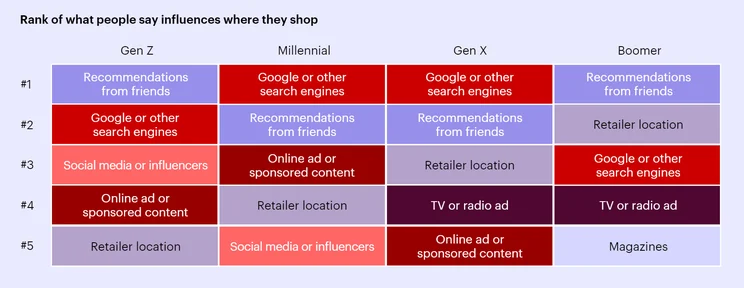
This chart highlights all the sources each generation turns to when picking where to shop. Source: Bain & Company
The report doesn’t weigh in on what might be driving this shift, but it certainly aligns with previous reports that Google is not the unshakable driving force of internet culture that it once was.
Google Is Still Important for Other Generations
What’s the takeaway from this?
For small businesses with ecommerce websites, not a lot has changed: Millennials and Gen Xers still have the most buying power, so Google remains key to keeping your bottom line up.
However, outlets and brands that are aimed at the emerging Gen Z might want to shift their strategy towards social media or other platforms that help directly influence younger shoppers in order to stay top-of-mind.
Interestingly, physical retailer locations are continuing their slow multi-generational decline: Every generation is less interested in using physical locations to determine where they shop than the previous one, including Gen Z.
Perhaps in the future, even more consumers will be shopping entirely from the comfort of their home.


