

A new study found that remote workers are increasingly willing to move in search of affordable housing, further solidifying the paradigm shift caused by the pandemic.
Remote work has been a boon for workers since 2020. The flexible working hours have increased employee wellbeing, allowing employees to take care of their families, run important errands, and generally get some of semblance of work-life balance.
Additionally, this new study shows that remote work has empowered employees to evade the rising prices of everything, including housing, to build the stable financial lifestyle that continues to elude so many.
Study Reveals Remote Work Trends
A new study from Fannie Mae has uncovered a wide range of remote work trends that have changed since the peak of the pandemic. One of the most significant stats is that remote workers are increasingly willing to move in order to find more affordable housing.
In fact, the change has been quite substantial in such a short period of time. In 2023, 22% of employees noted that they were willing to move cities while remote working for the purpose of moving to a more affordable area, while only 14% said the same in 2021.

This just in! View the top business tech deals for 2026 👨💻
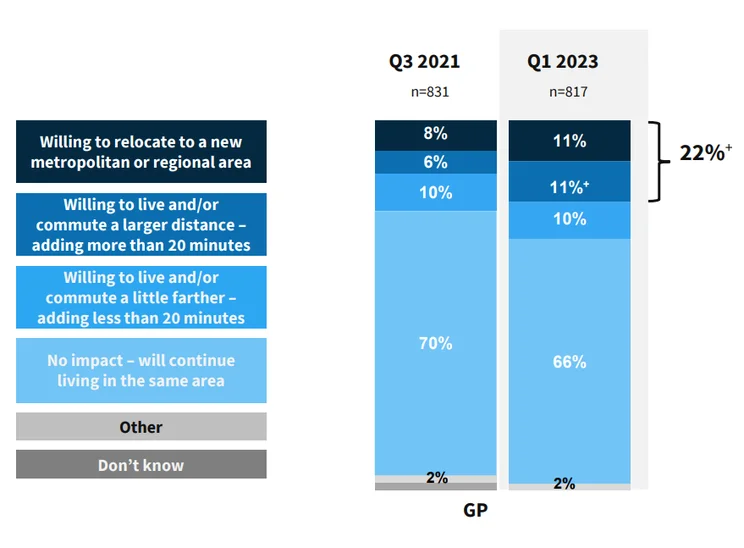
More importantly, this sentiment is shared across all income and age groups, although younger employees — those between the age of 18 and 34 — were notably more willing and experiencing a higher increase. Those workers were only 18% open to moving for affordable housing in 2021, as opposed to 30% in 2023.
Why Are Remote Workers More Willing to Move?
So, what exactly is the reason for this shifting trend? Well, the researchers from Fannie Mae have one theory:
“We believe this greater willingness to live farther from the workplace may be an indication that some workers are feeling more secure about their remote work situation or their ability to find another job if their current employer were to change its policies.” – Fannie Mae researchers
That may very well be the case, although other studies about the decreasing prevalence of remote work opportunities might undermine that theory, or at least leave these employees in trouble if anything goes wrong.
In all likelihood, the main driver of this willingness to move is sky high housing prices that have gripped the entire country. Rent is higher, mortgages are higher, home prices are higher, and the availability of new homes is dwindling by the day. As a result, workers are willing to do whatever it takes to be more financially stable.
The Value of Remote Work
With all the return-to-office mandates being announced — and receiving substantial backlash — you might think that it’s time to get your employees back in the office. However, as this study and others have shown, this can have a negative impact on the financial and mental wellbeing of your employees, and therefore, the bottom-line of your business.
For starters, remote work continues to be a high priority for top talent, which means that your recruiting efforts are going to take a serious hit if you’re back in the office. On top of that, remote workers are reportedly 22% happier than in-office employees, so if you want a satisfied workforce, working from home is an excellent option.
All that to say, remote work continues to prop up the problematic business world that refuses to raise wages in line with cost of living. And taking it away from your employees isn’t going to help, particularly if you rush the decision.


