
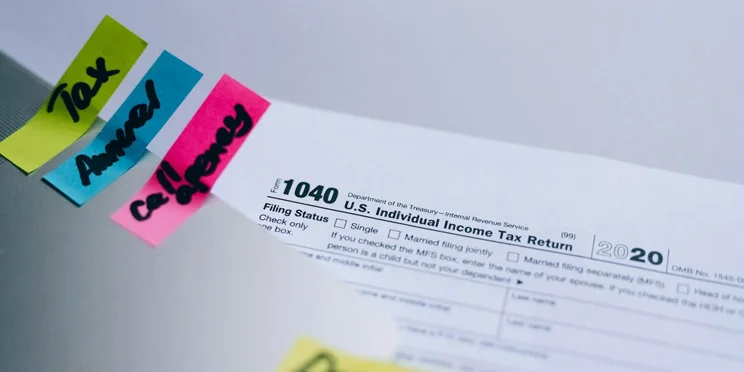
- AI phishing attacks may promise tax credits and refunds or threaten to collect on a debt.
- The IRS is unlikely to send anything other than snail mail, so be very cautious of emails or calls.
- If you’ve been scammed, report it to the BBB, the IRS, or the Federal Trade Commission.
Tax season is a holiday for many hackers: If they’re after financial information, there’s no better time to wheedle it out from unsuspecting victims.
In 2026, there’s a new scam threat to consider, and that’s AI. Phishing attempts might use text-based LLMs or voice-based impersonations, but with AI powering them, bad actors can send a hundred times as many messages.
Here are the signs to look for, as well as the ways that experts like the Better Business Bureau (BBB) are recommending people respond in order to stay safe.
A ‘Record Number of Calls’ to the IRS
Many of the most recent tax-related AI scams are fear-based: They impersonate debt collectors or the IRS, claiming that their target needs to immediately pay a fictional debt.
Threats of stronger penalties or even jail time help to keep the target too scared to question whether the phone call, text, or email they’re responding to is actually official.

This just in! View the top business tech deals for 2026 👨💻
BBB Senior Director of Communications Jason Meza, speaking to KSAT news, explained that the IRS “has seen a record number of calls come in.”
“We’re seeing a lot more calls, emerging calls of AI, impersonating the IRS, impersonating collectors, tax collectors, debt collectors trying to get you to pay up or face penalties or jail time.” -Meza
IRS Typically Uses Snail Mail
How can you know what’s a scam and what’s not?
For starters, you can reject a phone call, text or email that claims to be from the IRS. According to Meza, the IRS “traditionally does not use these services. In fact, they will use snail mail.”
If anything arrives unsolicited and you haven’t first reached out to the IRS for information, be very cautious.
Beware Unexpected Tax Refund Offers
Another tip? Common tax scams in 2026 include messages claiming that the target qualifies for new tax credits or larger refunds — relying on the target’s hope for more money or a better deal to trick them into sharing personal information.
Clicking on a link from these scam messages will direct victims to offer up Social Security numbers and birth dates, paving the way for full-blown identity theft.
If you think you’ve been a victim of a scam like any of the ones mentioned in this article, you should report it to the BBB, the IRS, and/or the Federal Trade Commission.


